
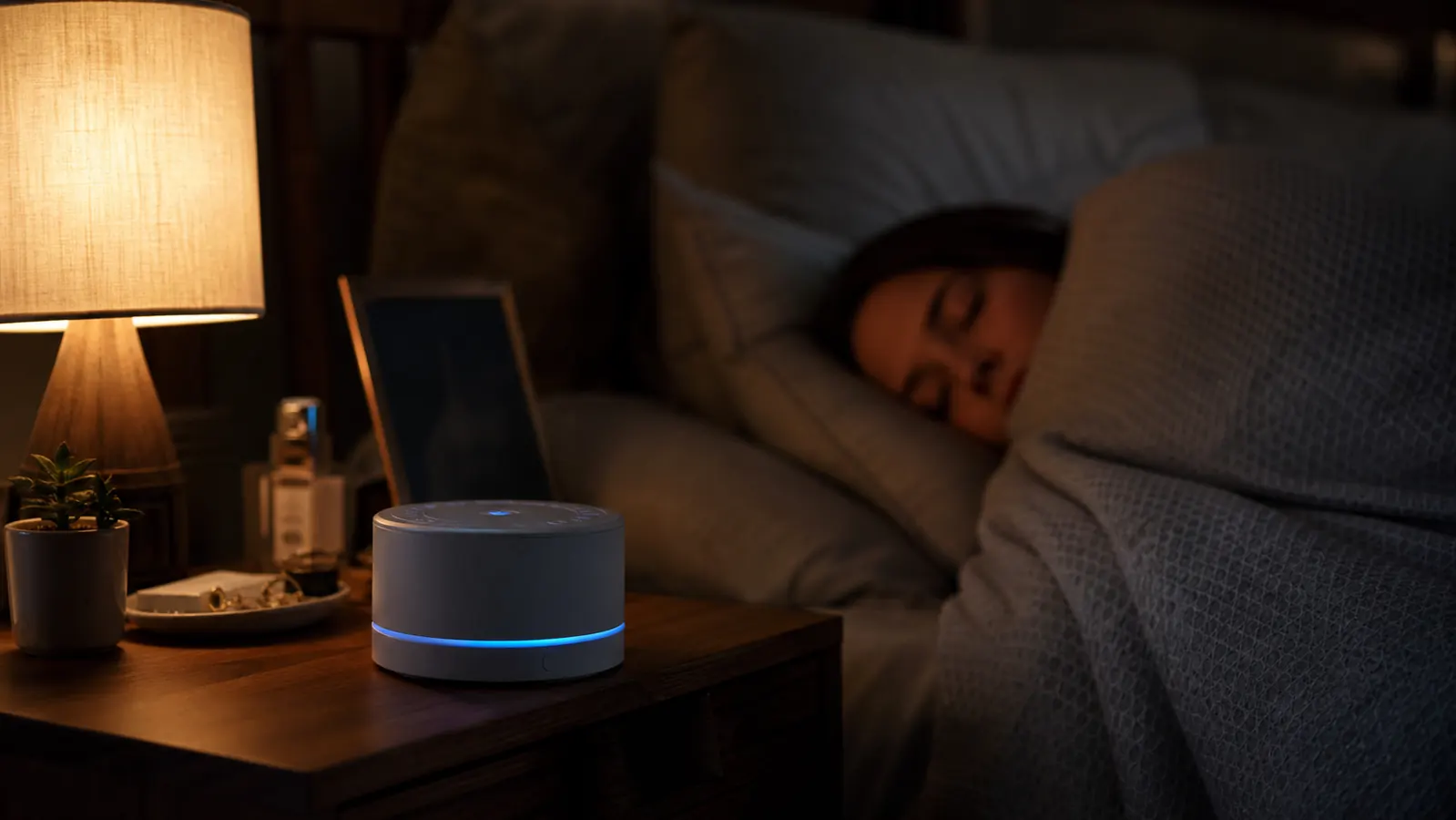
A white noise machine and a few simple room adjustments can make a genuinely loud bedroom feel quiet enough to sleep in. I know that sounds like an overstatement, but after trying the Magicteam white noise machine in an apartment with street noise, a hallway, and a neighbor whose TV was audible through the wall, I kept coming back to the same conclusion: noise is a solvable problem, and the solution does not have to be complicated.
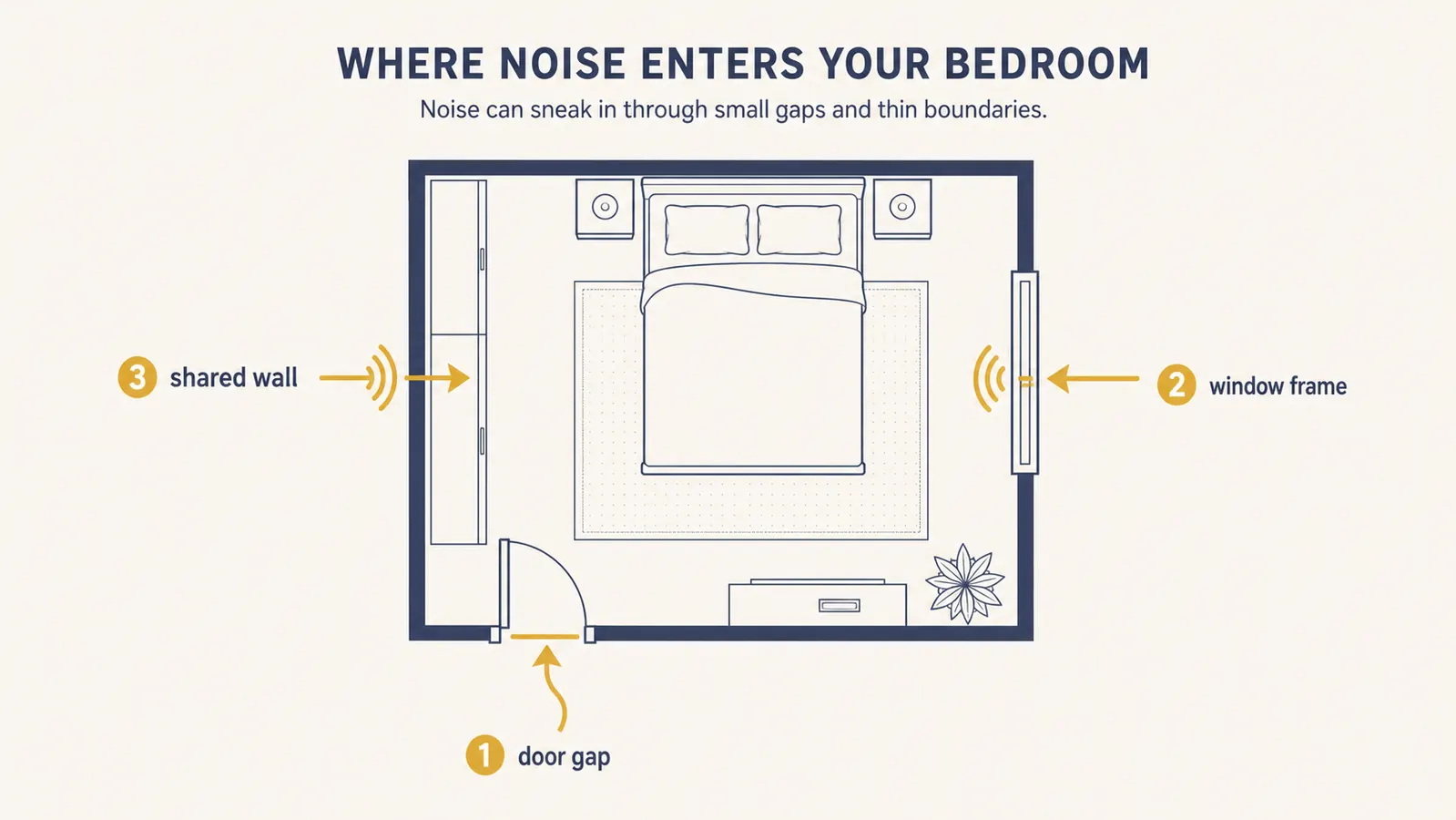
The mistake most people make is treating bedroom noise like a single problem when it is actually three separate ones. There is the source you cannot stop (traffic, a snoring partner, a barking dog down the block). There are the gaps the noise sneaks through (the gap under your door, the thin window frame, the shared wall). And there is your brain's tendency to jerk awake the moment a sound changes, even if the overall volume is low. This guide addresses all three, in order, so you are not throwing solutions at the wrong problem.
If noise is keeping you up, a white noise machine is the fastest fix in this guide.
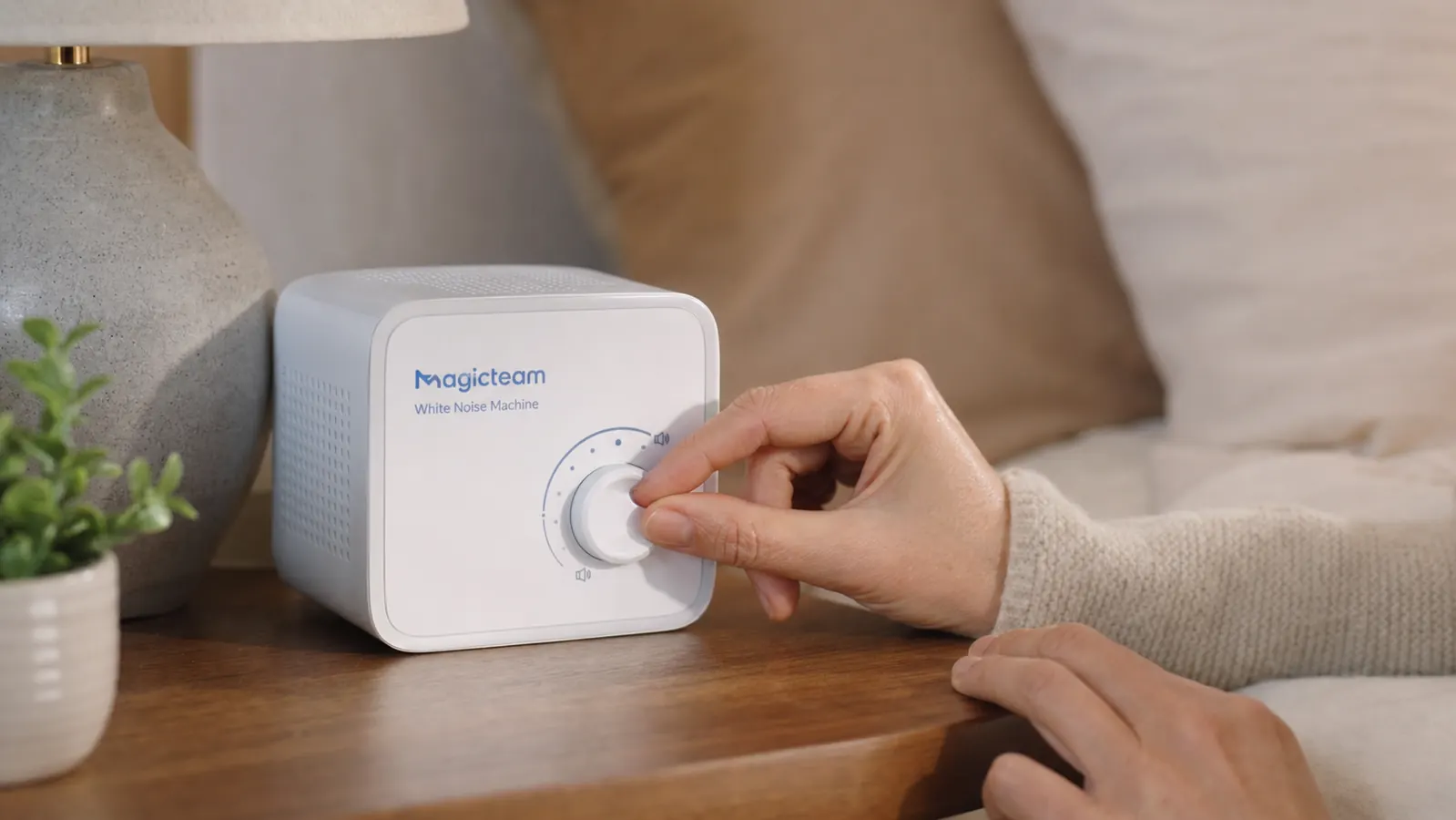
The Magicteam sound machine has 20 non-looping natural sounds, a simple volume dial, and 68,000 reviews from people who were also losing sleep to noise they could not control. It runs quietly all night and takes up about as much space as a coffee mug.
Amazon Check Today's Price on Amazon →Step 1: Identify Your Noise Type and Its Source
Before you buy anything or move anything, spend one night just listening. Lie in bed in the dark with your phone face-down and pay attention to what is actually waking you up or making it hard to fall asleep. Is it a steady hum from the street that never quite stops? Is it intermittent, like a car alarm, a neighbor's late-night conversation, or the building's HVAC system cycling on and off? Or is it sudden and sharp, like a slamming door or a dog barking at 3am?
The answer changes your strategy. Steady background noise is easiest to mask with white noise because the volume differential is small. Intermittent noise is trickier because your brain is wired to notice things that change, not things that stay constant. Sharp, sudden sounds are the hardest, because no level of masking eliminates a spike that is 20 decibels above the ambient sound. Knowing which category your noise falls into tells you how much you need to mask versus how much you need to physically block.
Also note the direction. Traffic noise through a window facing a busy street calls for a different fix than footsteps from an upstairs neighbor or bass from an apartment next door. Noting the source direction helps you decide where to place your white noise machine for maximum effect in Step 3.
Step 2: Seal the Easy Gaps First
Sound travels through air gaps with almost no resistance. The gap under a standard interior door, usually about half an inch, can let in a surprising amount of hallway or living room noise. A draft stopper or door sweep costs a few dollars and takes two minutes to set. It will not make the room soundproof, but it reduces the amount your white noise machine has to mask by a meaningful amount.
Windows are the second place to check. If your window frame rattles or does not close flush, street noise can leak around the edges even when the window is shut. Weather stripping foam tape fills those gaps and is inexpensive. If street noise is severe, heavy curtains lined with blackout fabric add a small but real acoustic buffer on top of blocking light. Neither of these fixes is dramatic on its own. Together with white noise, they make the room noticeably quieter.
Shared walls between apartments are harder to address without renovation. A bookshelf filled with books, a thick rug on the floor, or a fabric wall hanging can absorb some of the sound that would otherwise bounce around a bare room. Hard surfaces reflect sound; soft surfaces absorb it. If you have hardwood floors and bare walls, add some softness and you will notice a difference even before you turn on a white noise machine.
Step 3: Mask the Rest with a White Noise Machine
White noise works by raising the ambient sound floor of your room. When everything around you is at a consistent low volume, a new sound that enters the room has less of a contrast spike. Your brain registers contrast, not absolute volume, so a car horn that sounds jarring in a silent room barely registers when the room already has a soft, even sound filling it. This is why a white noise machine placed well can make a genuinely noisy apartment feel quiet enough to sleep through.
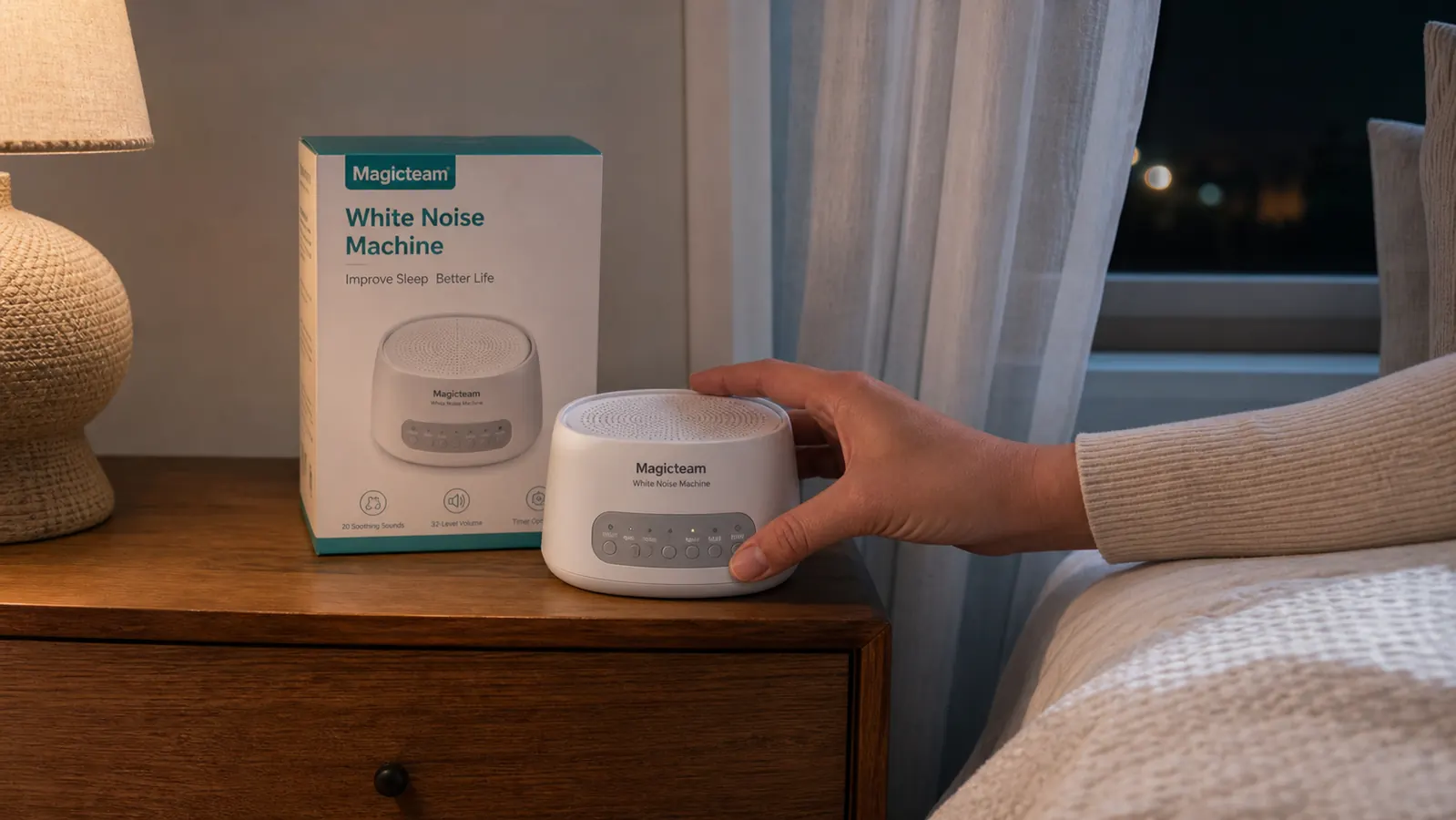
Placement matters. The Magicteam white noise machine should go between you and your primary noise source. If traffic noise comes through a window to your left, put the machine on your nightstand on that side. If hallway noise is the issue, put it near the door. You want the sound to wrap around you from the direction the interference is coming from, so your brain fills in that sonic space with something steady and neutral instead of with the noise you are trying to block.
For most bedrooms, a nightstand placement at roughly ear height when you are lying down is ideal. The Magicteam machine offers 20 non-looping sounds including white noise, brown noise, fan sounds, and a range of nature sounds like rain and ocean. Start with white noise or brown noise if your goal is masking. Brown noise has a lower frequency profile that many people find easier to sleep through than the brighter, airier quality of pure white noise. Try both for a few nights and see which one your brain settles into.
Step 4: Add Earplugs for Noise Spikes You Cannot Mask
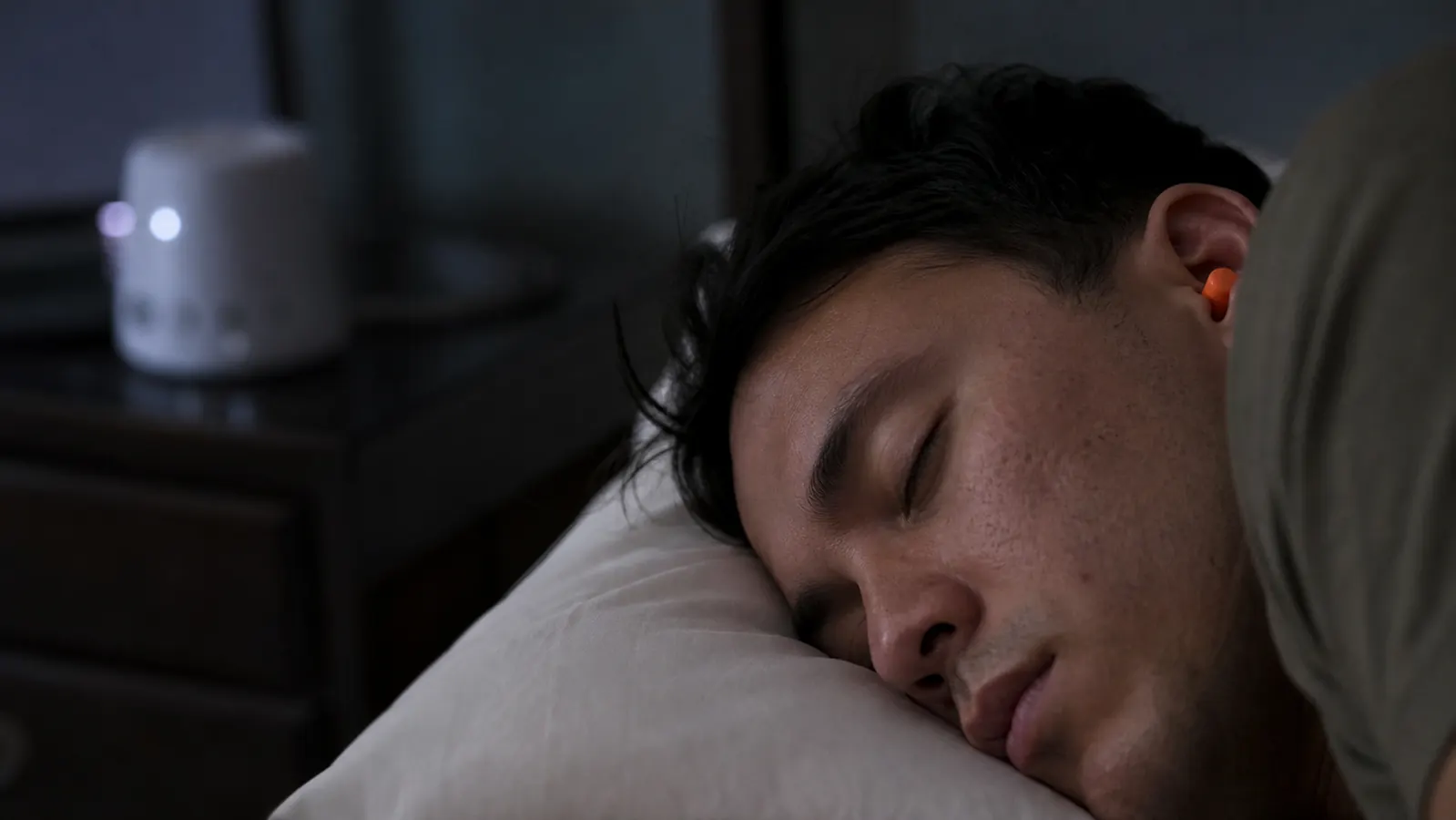
If you live near a late-night bar district, an active train line, or a neighbor with truly unpredictable hours, a white noise machine alone may not cover every spike. Sharp, sudden sounds above a certain volume will still register no matter how high you set the machine. At that point, the combination of a white noise machine and foam earplugs is more effective than either tool alone.
Standard foam earplugs reduce sound by around 30 decibels at the high end. They are not comfortable for everyone, especially side sleepers, but low-profile versions and wax earplugs conform better to ear shape and put less pressure on the outer ear. Paired with a white noise machine running at a moderate volume, the combination addresses both the consistent background noise and the occasional sharp intrusion. The machine masks the ambient layer so earplugs only have to deal with genuine spikes, not everything.
A note on volume: the goal with your white noise machine is not to drown out your building entirely by running it at maximum volume. Sustained very loud sound is not comfortable to sleep in either. Set the Magicteam machine to the lowest volume where you can feel the ambient sound floor rise, then adjust upward in small increments until the noise you are trying to block feels less intrusive. Most people land somewhere in the middle of the dial, not at the top.
Step 5: Set a Consistent Sound and Volume Every Night
Consistency is the part most people skip, and it is also where white noise machines earn most of their value over time. When you use the same sound at the same volume every night, your brain starts to associate that sound with sleep. The auditory cue becomes a signal, the same way that dimming the lights or a particular pillow smell can trigger a relaxation response. After a few weeks, turning on the machine starts to feel like part of falling asleep rather than a workaround for a problem.
The Magicteam machine does not have an auto-off timer that cuts the sound mid-sleep, which is intentional for this use case. A machine that shuts off after 30 or 60 minutes can actually wake you when the sound disappears, because your brain notices the contrast just as sharply as it notices a sound appearing. Running the machine through the night maintains the consistent acoustic environment that keeps you asleep during light-sleep phases when you would otherwise stir.
If you share a room with a partner who is more or less sensitive to noise than you are, this is worth a short conversation. Some people find white noise intrusive at first, especially if they are used to silence. Starting at a lower volume and giving it a week usually resolves that. What you are building is a new normal for the room, and that takes a few nights of adjustment on both sides.
What Else Helps
A sleep eye mask handles the light side of the sleep environment the same way a white noise machine handles the sound side. If your bedroom gets early morning light from streetlamps or thin curtains, a 3D contoured mask like the MZOO blocks the visual intrusion without pressing on your eyelids. Pairing a mask with a white noise machine covers most of what a noisy, bright environment throws at a light sleeper. Beyond that, keeping your phone on do-not-disturb with only true emergency contacts allowed through means your white noise setup is not being interrupted by vibrations and screen flashes at 2am. For a deeper look at how white noise works for different sleepers, the 10 reasons a white noise machine helps you sleep article covers the range of situations in detail. And if you want a closer look at the Magicteam machine itself before buying, the five-month white noise machine review covers what five months of nightly use actually looks and sounds like.
Sound travels through air gaps with almost no resistance. Seal the gap under your door, set your white noise machine between you and the noise source, and you have solved most of what is keeping you awake.
Ready to stop losing sleep to noise you cannot control?
The Magicteam white noise machine is the smallest, simplest piece of this setup and the one that makes the biggest difference fastest. Twenty non-looping sounds, a volume dial, and no subscription required. It runs all night, fits on a nightstand, and has 68,000 reviews from people who were in the same situation you are in right now.
Amazon Check Today's Price on Amazon →