
If you have been lying awake wondering whether a weighted blanket will actually help you sleep, the YnM weighted blanket is one of the most-bought options on Amazon for good reason, but buying the wrong weight or the wrong size is the fastest way to send it back inside a week. The difference between a blanket that feels like a reassuring hug and one that feels like a trap is almost entirely in how well you match it to your body.
Weighted blankets work by applying gentle, even pressure across your body, and that pressure needs to be in the right range to feel comfortable. Too light and your nervous system barely registers it. Too heavy and you spend the night trying to shift it off your chest, waking up more tired than when you started. This guide walks through the five decisions that actually matter, in the order you should make them, so you land on the right blanket the first time and start sleeping better within the week.
Your body weight tells you which YnM to buy. Skip to your answer on Amazon.
The YnM Weighted Blanket is available in multiple weights from 5 lbs to 25 lbs and several sizes. Over 49,000 buyers have rated it 4.6 out of 5 stars. Check the current weight options and today's price to find your match.
Amazon Check Today's Price on Amazon →Step 1: Start with Your Body Weight, Not a Gut Feeling
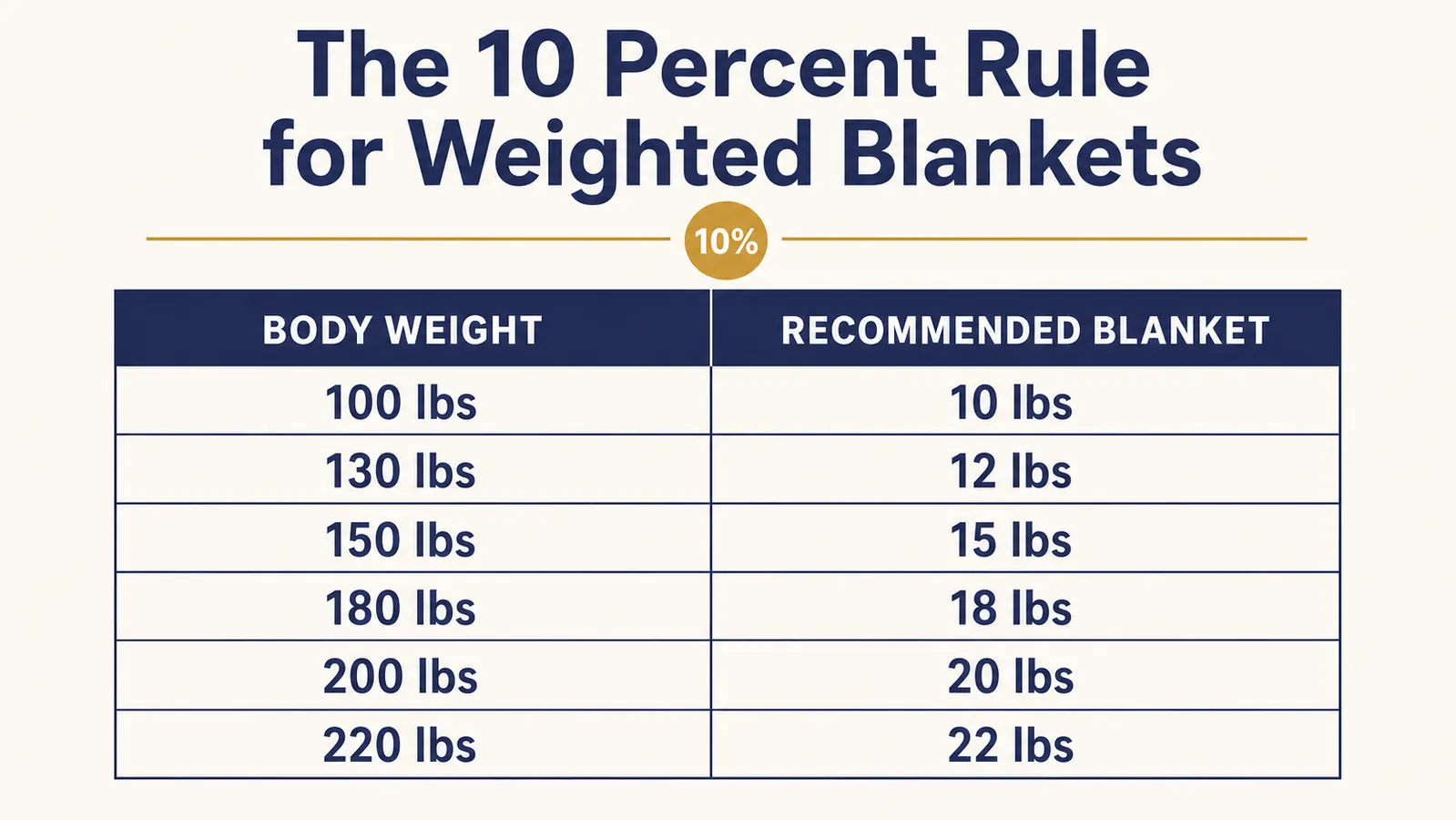
The 10 percent rule is the starting point every occupational therapist and sleep consultant reaches for first: a weighted blanket should weigh roughly 10 percent of your body weight. If you weigh 150 pounds, that puts you in the 15-pound range. At 180 pounds, you are looking at an 18-pound blanket. At 120 pounds, a 12-pound blanket fits the formula. The rule is not rigid, it is a starting point, but it is based on the idea that at around 10 percent of body weight the pressure registers as grounding rather than restrictive.
The YnM line is sold in 5, 7, 10, 12, 15, 17, 20, and 25-pound options, which means the math almost always lands on an available size. If you fall between weights, choose the lighter one first. You can always add a second blanket on top if you want more, but a blanket that is too heavy tends to feel uncomfortable from the first night and never quite breaks in. Returning something that weighs 15 pounds is also a much bigger logistical hassle than most people anticipate, so getting close on the first order matters.
One common mistake is buying based on what felt good in a store display, which usually means tossing the blanket across your hands for a few seconds. That test tells you very little. The pressure feels different when the blanket is distributed across your whole body while you are lying flat. Go by the formula, then adjust after a week if needed. If the lighter option still feels like too much after seven nights, there is something else going on with sleep comfort that the blanket alone will not fix.
Step 2: Pick the Size That Fits You, Not the Bed
This is where most people go wrong. A weighted blanket is not meant to drape to the floor on both sides of a king bed. It is meant to cover one person from shoulders to feet. When the blanket hangs over the edges of the mattress, the weight pulls sideways rather than pressing down on your body, and you lose most of the benefit. A 60 by 80 inch blanket covers one adult sleeping in a full or queen bed without a lot of floor drape. A 48 by 72 inch blanket is a better fit for someone sleeping alone in a twin or who sleeps in a compact sleep position.
Couples sharing a bed will often find that one weighted blanket creates problems because the two sleepers have different ideal weights. A 15-pound blanket feels perfect for a 150-pound person and noticeably heavy for a 120-pound person in the same bed. The practical answer is two separate blankets, each sized and weighted for one person. It costs more upfront but removes the negotiation every single night, and both people get the pressure experience that actually works for them.
If you sleep with a partner who is curious but not yet convinced, start with a twin-wide blanket just for yourself. You get the full pressure effect without affecting the other side of the bed, and you do not need to convince anyone else to try something new before you have had a chance to test whether it actually changes how you sleep.
A weighted blanket should cover you from shoulders to feet and stay mostly on the mattress. The moment it starts hanging off the sides, you are pulling pressure away from your body.
Step 3: Choose Your Fabric Based on How Warm You Sleep
The YnM weighted blanket comes in a cotton outer shell as the standard option, which is breathable enough for most sleepers in a temperature-controlled bedroom. If you tend to run warm at night, sleep in a room that does not cool down much, or live somewhere with hot summers, the cotton shell is the better choice. Cotton wicks some moisture and does not trap heat the way thicker or polyester-heavy fabrics do. Many warm sleepers use the cotton version year-round without issue as long as the room is reasonably cool.
If you are a cold sleeper or you use your weighted blanket mainly during the winter months, YnM also offers a minky dotted version with a softer, slightly warmer feel against the skin. The minky fabric runs noticeably warmer, which is welcome in January and uncomfortable in July. Think honestly about your typical sleeping temperature before you choose the material, because material is not something you can easily swap out after the fact. The outer fabric is sewn directly to the blanket body, not a removable cover.
One thing to know: the glass beads inside the blanket are always the same regardless of which fabric shell you choose. The beads do not add warmth the way down fill would. The temperature difference between weighted blanket options comes almost entirely from the outer fabric, so that is where to focus your attention when you are comparing options. If you get the fabric wrong, no amount of adjusting the thermostat will fully compensate.
Step 4: Check the Fill Quality and Bead Distribution Before You Commit
Not every weighted blanket is built the same way on the inside. The thing that separates a well-made blanket from a poorly made one is how evenly the weight is distributed across the surface. Cheaper blankets use large pockets with fewer beads, which means the weight shifts around and clumps toward the edges as you move. A well-designed blanket uses a tight grid of smaller pockets, each filled with a measured amount of glass beads, so the weight stays uniform from one side to the other regardless of how you move during the night.
The YnM design uses a 7 by 7 inch grid of pockets and fills each cell with micro glass beads rather than plastic pellets. Glass beads are denser and quieter than plastic ones, so the blanket lays flat and does not make noise when you shift positions. Plastic pellets have a tendency to clump and produce a subtle rustling sound when you move. That sound is quiet enough that most people do not notice it consciously, but it can register just enough to pull a light sleeper out of a deeper stage of sleep.
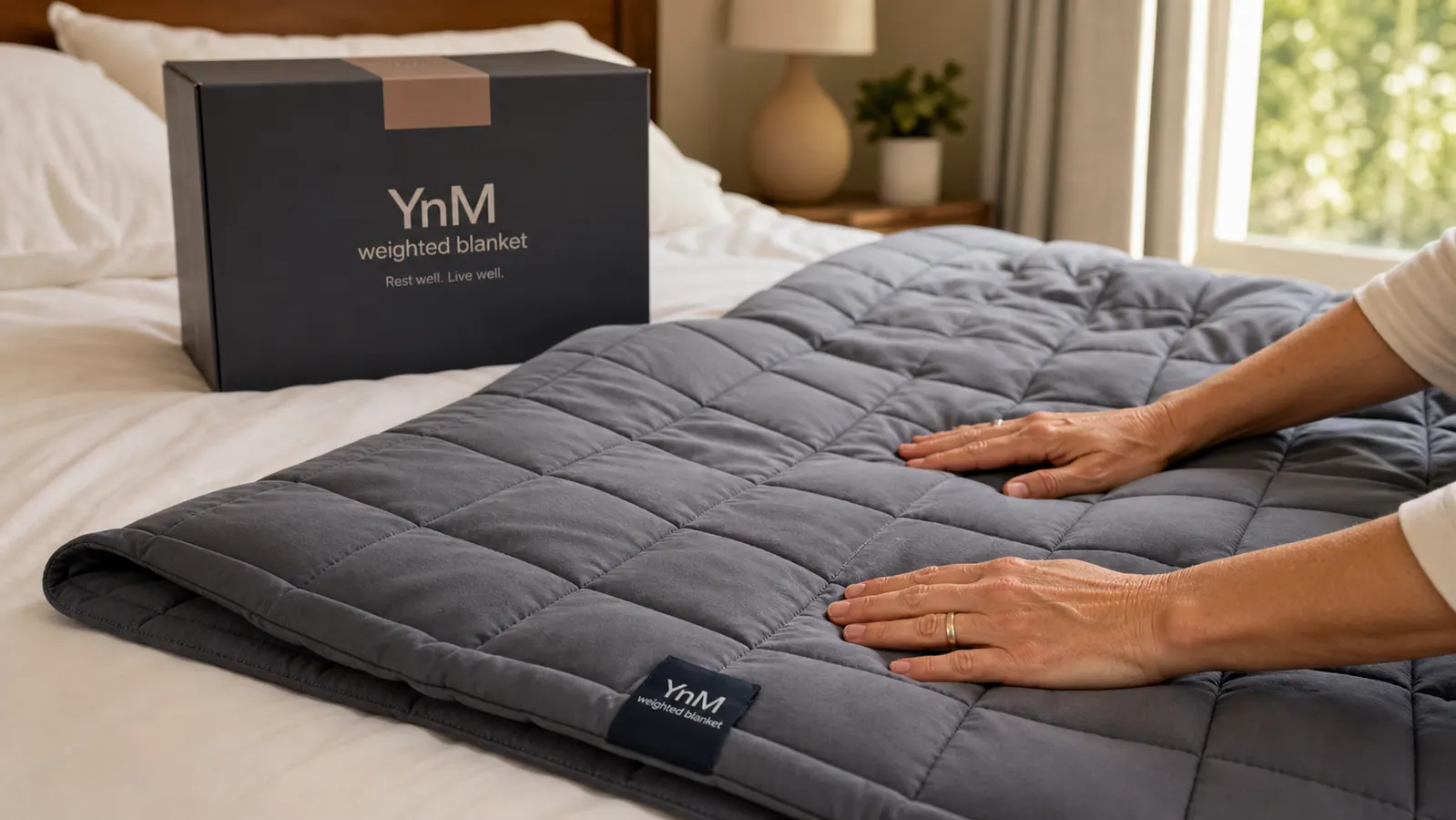
When your blanket arrives, lay it flat on the bed before you use it and run your hands across the surface in a slow grid pattern. Every pocket should feel consistently filled. If you notice one area that is noticeably lighter or emptier than the surrounding pockets, that is a manufacturing quality issue worth flagging before your return window closes. With the YnM, uneven fill is rare given the volume of consistent reviews across nearly 50,000 buyers, but a quick check on arrival takes thirty seconds and gives you confidence before you commit to it.
Step 5: Plan for Washing Before You Buy, Not After
A weighted blanket that you cannot wash easily will get dirty and eventually get demoted to the closet. The first thing to check is whether your home washing machine can handle the weight. Most standard top-load washing machines can manage a 15-pound blanket, but the spin cycle on some older or smaller machines struggles with the wet weight, which is heavier than the dry weight. If your machine is on the smaller side, a 12-pound blanket is usually the practical ceiling. Front-load machines handle heavier loads more comfortably because the drum rotation distributes the weight differently than a top-load agitator does.
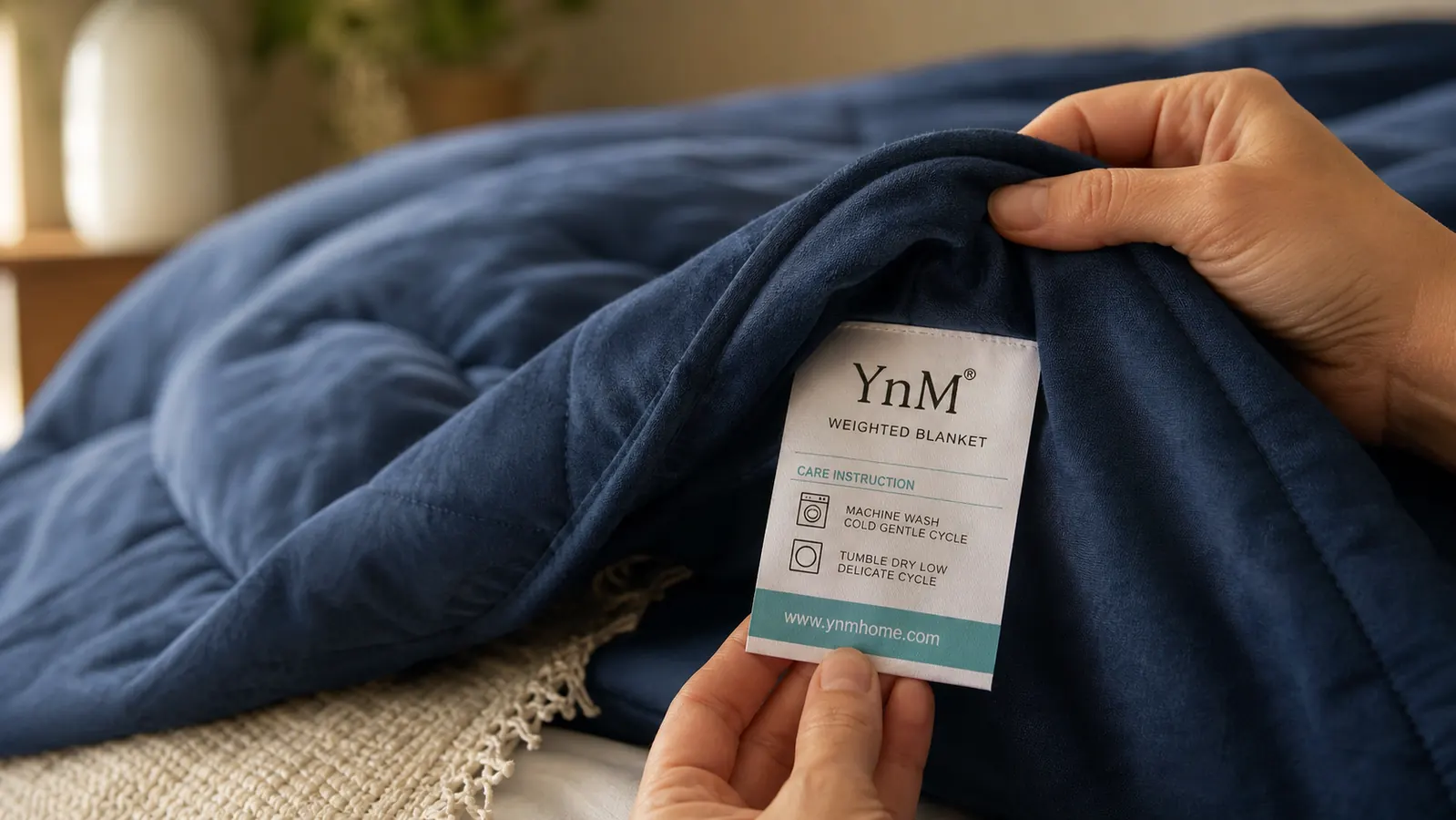
The YnM weighted blanket is machine washable in cold water on a gentle cycle, and it can go in the dryer on low heat. That care combination is realistic for most households without a trip to the laundromat. A few things that shorten the life of any weighted blanket: hot water washing, high heat drying, and putting it in the dryer before redistributing the beads back toward the center. Let the blanket air dry partway first, then finish it in the dryer on low. This keeps the seams from stressing under the wet weight and helps the pockets dry evenly so beads do not settle in odd patterns.
If you share the blanket with a pet or have young children who might use it, consider buying a removable duvet cover that fits over it. Washing a duvet cover every week is far easier than washing the full weighted blanket, and it protects the seams and stitching over time. Many people find that a duvet cover also adds a layer of softness to the surface, which makes the blanket more comfortable against bare skin during warmer months.
What Else Helps When You First Try a Weighted Blanket
Give yourself at least seven nights before you decide whether a weighted blanket is working for you. The first night or two often feel a little different, not because anything is wrong but because your body is registering a new sensation and your nervous system is paying attention to it. By the third or fourth night most people either feel settled under it or have a clear sense that the weight is off and needs adjusting. If you got the size and weight right using the steps above, the sensation should shift from noticeable to quietly comforting within the first week. Pair the blanket with a consistent bedtime, a cool room, and a dark environment, and you give it the best possible conditions to work. Darkness matters more than most people expect. If light is still getting into your bedroom, the change in your blanket will help but will not fully offset a room that does not feel like a good place to sleep.
Already know your weight? The YnM ships fast and the return window gives you time to be sure.
The YnM Weighted Blanket carries a 4.6-star rating across nearly 50,000 reviews and ships in multiple weights so you can match it precisely to your body. Check current availability and today's price before the weight option you need sells out.
Amazon Check Today's Price on Amazon →