
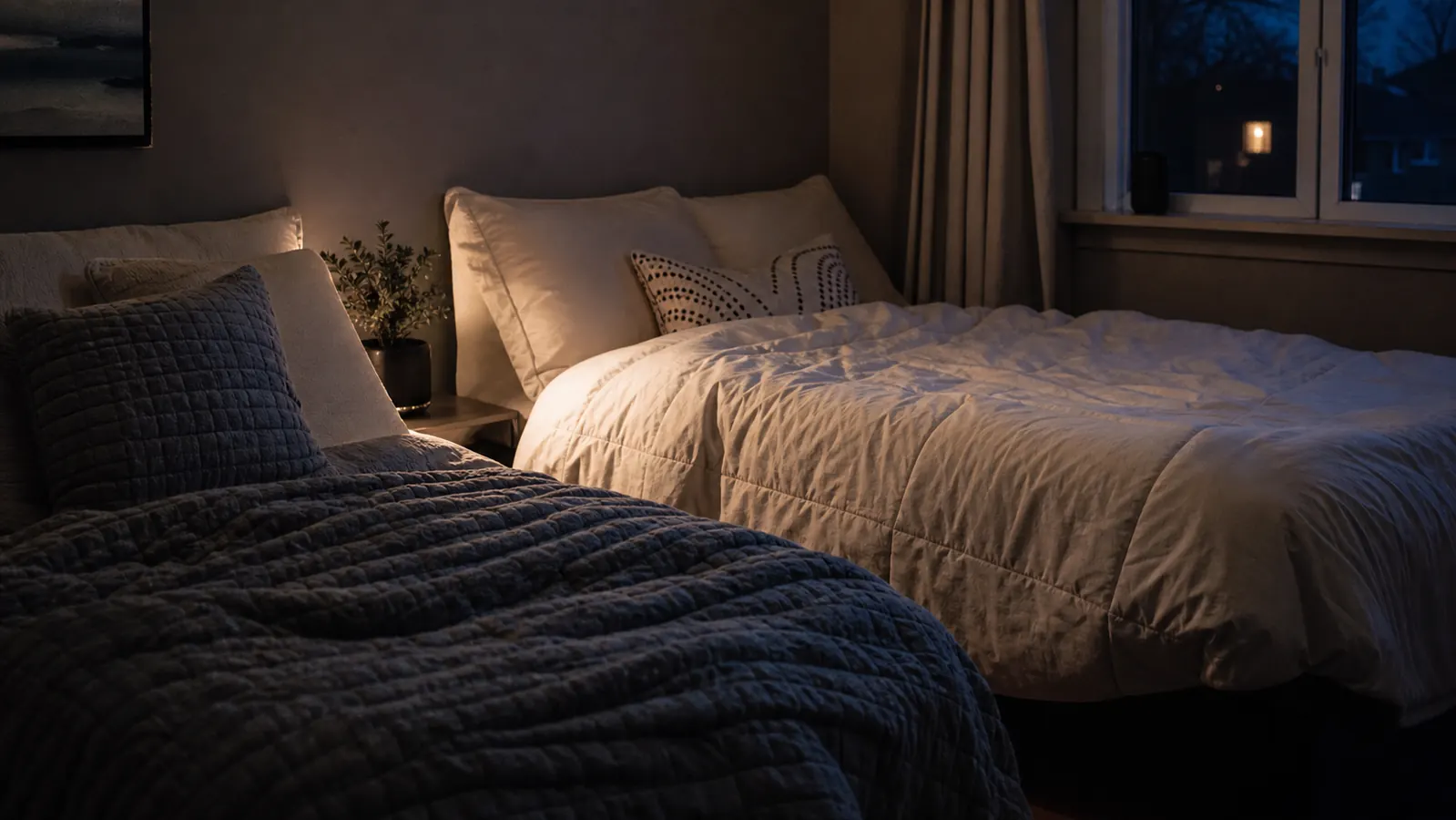
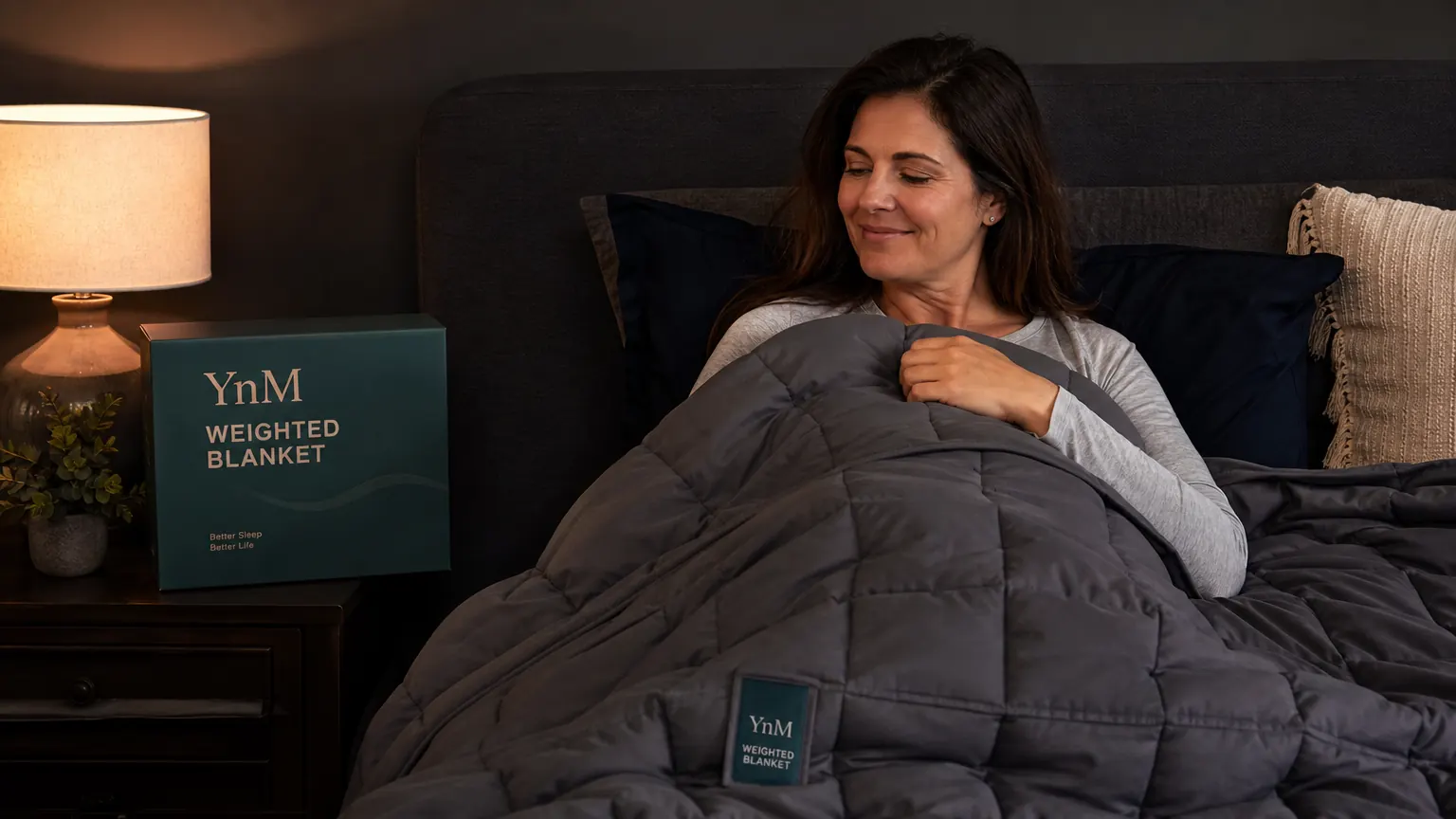
If you have spent any time researching ways to sleep more soundly, you have probably come across the YnM weighted blanket, one of the most-reviewed products in the comfort sleep category with nearly 50,000 Amazon ratings. The question most people ask before buying one is whether a weighted blanket actually does something meaningfully different from the regular comforter already folded at the foot of their bed.
We tested both side by side over several weeks, tracking how quickly we fell asleep, how often we woke up, and how each blanket held up through washing, warmer nights, and sharing a bed. The short answer: the weighted blanket wins on sleep comfort for restless sleepers, but a standard comforter is genuinely better in two situations. We will explain exactly when each one makes sense.
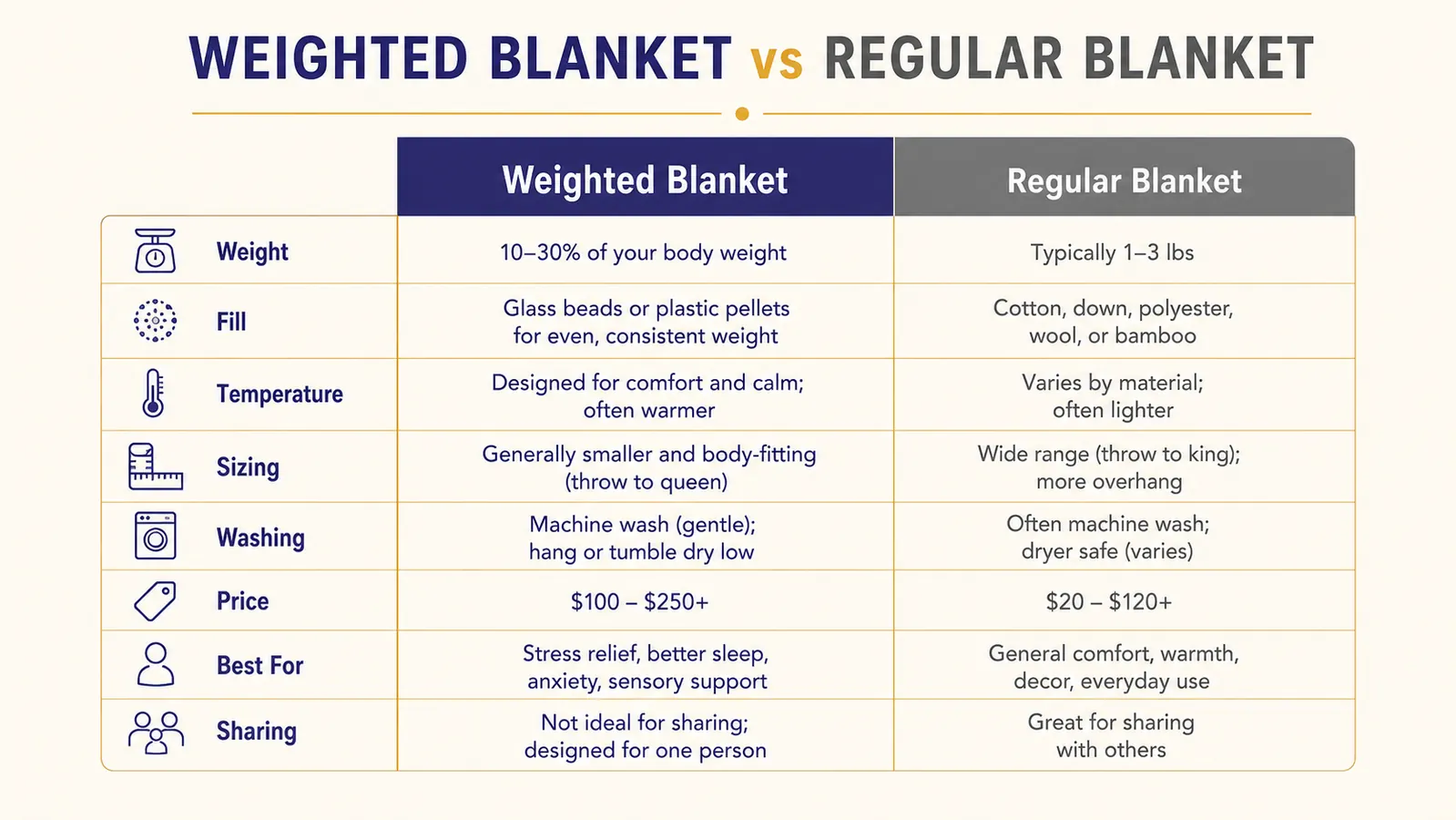
| YnM Weighted Blanket (15 lb) | Standard Comforter | |
|---|---|---|
| Weight | 15 lbs (follows the 10% of body weight rule) | 1.5 to 3 lbs, varies by fill |
| Fill material | Glass micro-beads in quilted 4x4 inch pockets | Down or polyester fiber, no beads |
| Temperature | Runs warmer due to density, though cotton cover helps | Ranges from lightweight to very warm, more options available |
| Sizing to body weight | Must be matched to sleeper weight (use 10% rule), single-use design works best | One size fits all, no body weight math required |
| Washing | Machine washable under 20 lbs, needs large-capacity machine, slow dry time | Most are machine washable in standard drum, faster and easier to launder |
| Price | Higher upfront cost | Wide range available, budget options start lower |
| Best for | Restless sleepers, anxious sleepers, people who toss and turn | Hot sleepers, couples who share, people who already sleep soundly |
| Partner sharing | Works best as a personal blanket, not ideal for sharing across two different body weights | King or queen size covers two people easily, no sizing conflict |
Where the YnM Weighted Blanket Wins
The core difference between a weighted blanket and a regular one is something called deep pressure stimulation. When even weight is distributed across the body, the nervous system tends to shift into a calmer state. For people who lie awake with restless legs, racing thoughts, or a general sense of unsettledness at bedtime, that steady pressure can make a noticeable difference in how quickly they settle.
The YnM design handles this better than many weighted blankets at its price point because the beads are distributed in small quilted pockets. That means the weight does not shift to one side when you roll over. The blanket stays draped across you evenly. In our testing, we noticed that the transition from restless to settled happened faster than it did under a standard comforter, and we woke up fewer times in the middle of the night. It is not a dramatic shift on the first night, but after a week the difference became consistent.
The glass micro-bead fill deserves a closer look because it is what separates a good weighted blanket from a frustrating one. Each of the YnM's 4x4-inch quilted pockets holds a measured amount of beads, sealed on all four sides. When you move, the beads in each pocket shift only slightly before gravity resettles them. The result is a blanket that conforms to your body rather than piling up in one spot. Cheaper weighted blankets use larger plastic pellets or a single long column of fill, and you can feel the uneven pressure when you lie still. With the YnM, the weight feels genuinely distributed, which is the whole point.
The sizing math matters more than most buyers expect, and it is worth walking through a real example before you add one to your cart. The standard guideline is to pick a blanket that weighs roughly 10 percent of your body weight. If you weigh 160 pounds, that puts you squarely in the 15-pound blanket range. If you weigh 120 pounds, the 12-pound option is closer to ideal. Go too light and the blanket feels like a normal comforter with extra laundry inconvenience. Go too heavy and the pressure starts to feel restrictive rather than calming, some people find it uncomfortable to breathe deeply under a blanket that is significantly over their target weight. The YnM comes in options from 5 pounds up to 25 pounds in 3-pound increments, so there is a version for most adults. If you land exactly between two sizes, err lighter on your first purchase. You can always layer a thin throw on top if you want more, but you cannot subtract weight from a blanket that is already too heavy.
The YnM also holds its shape through washing better than cheaper weighted blankets we have tested. The stitching on the pocket dividers stayed tight through multiple wash cycles, and the beads redistributed evenly when we laid it flat to dry. That durability matters because a weighted blanket that bunches up loses the even distribution that makes it work.
Where the Regular Blanket Wins
Hot sleepers have a real case for sticking with a lightweight comforter. The density that makes a weighted blanket effective also makes it warm. The YnM is available with a cotton cover which helps, but it still traps more heat than a traditional down-alternative comforter in a breathable shell. If you already sleep warm and kick off blankets halfway through the night, a 15-pound weighted blanket is likely to make that problem worse rather than better.
Couples sharing a bed also have a genuine reason to keep a standard blanket in the mix. Weighted blankets are most effective when matched to a single sleeper's body weight, roughly 10 percent of your body weight is the common guideline. A blanket sized for a 150-pound person will feel too light for a 200-pound partner and too heavy for a 120-pound partner. A king-size comforter covers two people without any weight math. If sharing is the priority, a regular blanket is simply the more practical choice, and the easier wash is a bonus.
The two-sleepers-one-bed scenario deserves its own paragraph because it comes up constantly in reviews. One person wants the pressure and one person finds it confining. The most practical solution we have seen is for each person to use their own blanket: the restless sleeper gets a personal weighted blanket sized to their weight, and the other person keeps a regular comforter on their side. This works well on a king bed and avoids the classic weighted-blanket complaint that it slides off the smaller person's side when the larger person rolls over. If buying two separate blankets feels excessive, keep the comforter as the shared base layer and let the person who wants weight add the weighted blanket on top of their half.
Temperature across seasons is the other honest win for a standard comforter. Most households have a lightweight summer comforter and a heavier winter one that swap out twice a year. That flexibility is straightforward and costs very little once you own both. A weighted blanket is a year-round proposition, which means it has to work in both June and January. The YnM cotton-cover version handles mild seasonal changes reasonably well, but if you live somewhere with genuinely hot summers, you may find yourself in a situation where the pressure is helping your restlessness but the warmth is keeping you awake. A breathable cotton sheet alone is usually a better choice in those weeks. Duvet cover maintenance also runs simpler on a regular comforter: most down-alternative duvets slide into a cover in a few minutes, tumble dry on low in 45 minutes, and come out ready to use. The YnM needs a large-capacity machine, a long dry cycle on low heat with a few dryer balls, and ideally a second pass if the bead pockets feel damp. Doing it right takes closer to two hours. It is not a hardship, but it is a real difference in the weekly laundry routine.
Still tossing and turning at midnight? The YnM weighted blanket has nearly 50,000 reviews from people who had the same problem.
The 15 lb option is the most popular size and fits most adults between 140 and 190 pounds. Check current availability and sizing options on Amazon.
Amazon Check Today's Price on Amazon →How We Compared Them
We ran both blankets in the same bedroom across three weeks, alternating every few nights. We tracked sleep onset time using a simple sleep log, noted middle-of-the-night wake events, and paid attention to temperature comfort across cooler and warmer evenings. We also washed both blankets three times each to see how the materials held up over repeat cycles.
The comforter we used for comparison was a mid-range queen-size down-alternative, the kind many households already own. It is representative of what most people are comparing a weighted blanket against when they are deciding whether to make the switch.
After a week under the weighted blanket, we were waking up less often and settling faster. The comforter we had used for years was comfortable, but it was not doing anything about the restlessness.
The Weight Selection Question
One thing that catches first-time weighted blanket buyers off guard is that weight selection actually matters. The 10 percent of body weight guideline exists for a reason. A blanket that is too light will not provide enough pressure to feel different from a regular blanket. A blanket that is too heavy feels restrictive rather than calming, and some people find it difficult to breathe comfortably under it.
The 15-pound YnM blanket works well for people in roughly the 140 to 190 pound range. YnM offers the same blanket in multiple weight options from 5 pounds up to 25 pounds, so it is worth picking the right one rather than defaulting to the most popular size. If you are between sizes, go lighter, especially if you have not slept under a weighted blanket before. You can always layer a light throw on top if you want more.
Who Should Buy Which
The YnM weighted blanket makes the most sense if you are a restless sleeper who struggles to settle at bedtime, wakes frequently during the night, or has a general sense of tension that keeps you from feeling relaxed in bed. The pressure effect is real and the YnM delivers it more consistently than most blankets in this price category. If you share a bed, consider each person getting their own smaller weighted blanket rather than one large one, or keep the standard comforter as the shared layer and let whoever needs the weight use the YnM on their side.
Stick with a regular comforter if you sleep hot, if you already sleep well and want a blanket mostly for warmth, or if easy washing and low maintenance are your top priorities. A standard comforter does those jobs better. It is also the right call for young children, who should not use a weighted blanket above 10 percent of their body weight without guidance from a pediatrician.

For the restless adult who has already tried sleep hygiene tweaks, a cooler room, and cutting off caffeine earlier, the weighted blanket is often the missing piece. It does not change the temperature of your room or block noise from a snoring partner, but it does change how your body feels while it tries to relax, and for a lot of people that is the difference between lying awake at midnight and actually drifting off.
How We Would Decide
If the price difference is the sticking point, it helps to think in terms of cost per year of use rather than upfront cost. A well-made weighted blanket that holds its bead distribution and seam integrity for five years works out to a modest annual cost, comparable to a decent pillow. The durability question matters here: the YnM's reinforced pocket stitching is the reason it earns repeat purchases and positive long-term reviews. A cheaper weighted blanket that bunches up within a year is not a bargain at any price. On the regular blanket side, a quality down-alternative comforter at a lower upfront price also stretches across many years with minimal care, so neither option is a bad investment over a normal household lifespan.
The clearest deciding factor is sleep restlessness. If you fall asleep easily and stay asleep, a regular comforter is doing its job and a weighted blanket adds complexity without adding much benefit. If you lie awake, toss and turn, or wake up feeling like you barely slept, the weighted blanket addresses something the regular comforter simply cannot: the physical sensation of pressure that signals to your nervous system that it is safe to settle. That is the gap between them, and it is the gap most worth paying attention to.
Ready to try the blanket that nearly 50,000 people say changed how they sleep?
The YnM weighted blanket is available in multiple weights and sizes. Pick the one closest to 10 percent of your body weight for best results.
Amazon Check Today's Price on Amazon →