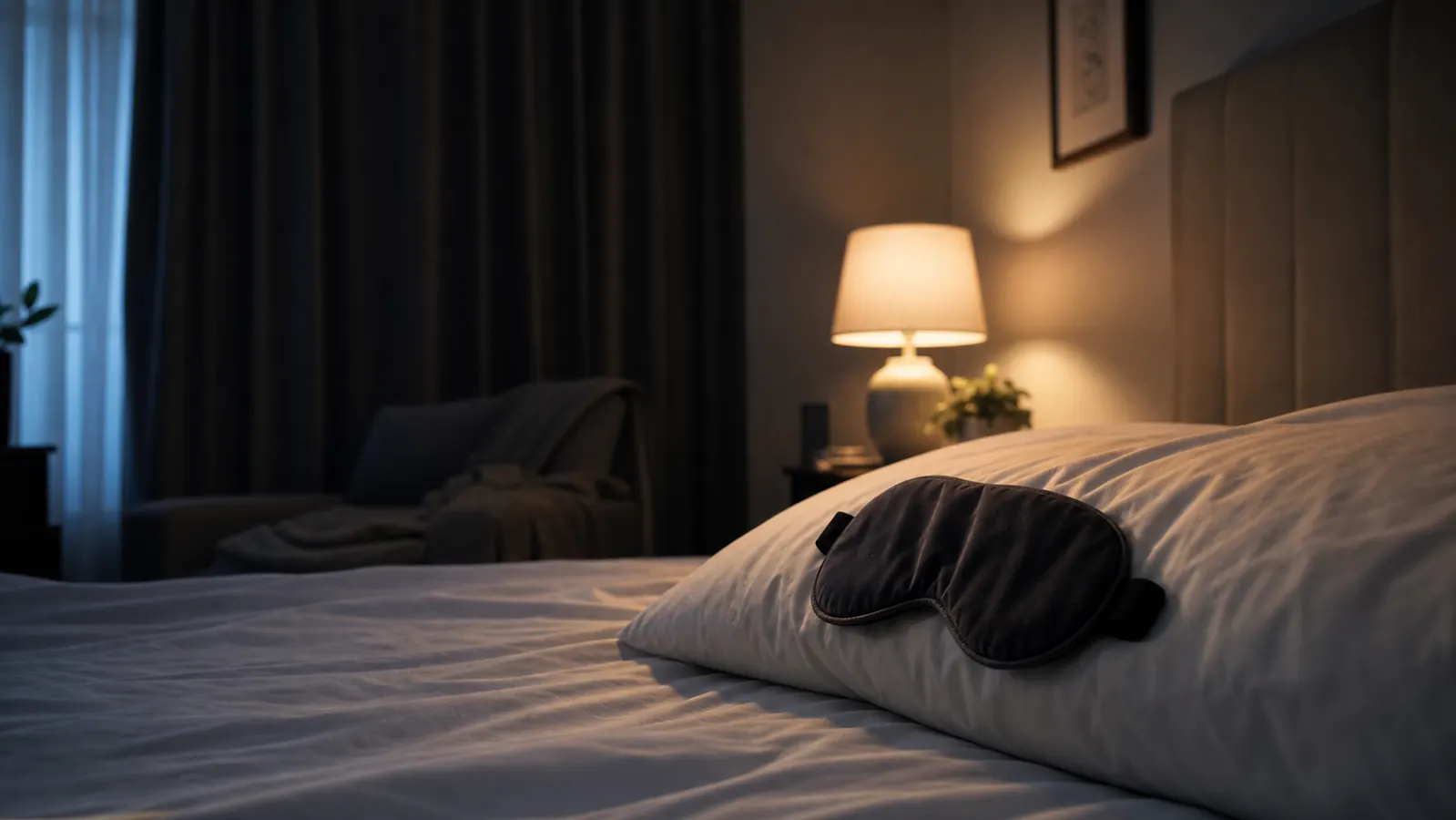
If you have ever climbed into bed exhausted and still found yourself staring at the ceiling for forty minutes, a 3D sleep eye mask like the MZOO may be the single fastest fix you have not tried yet. Light is not a minor inconvenience at bedtime; it is a biological signal that tells your brain the day is still happening, and as long as that signal is present, falling asleep takes longer than it should.
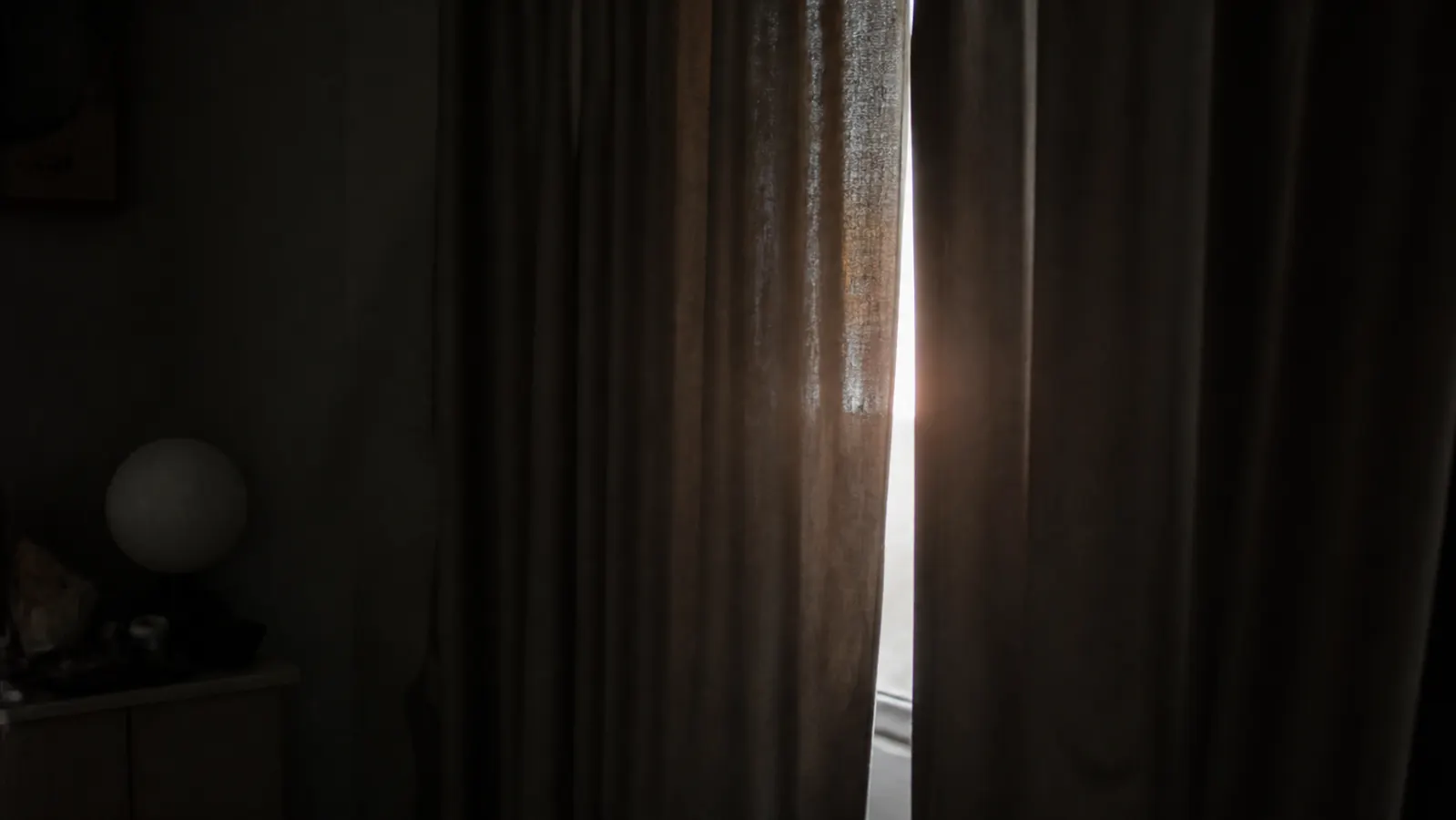
Most bedrooms are not actually dark. There is the glow from a street lamp pushing through curtains that do not quite close. There is the router light on the desk. The standby LED on the TV. The strip of hallway light under the door. None of these feel bright, and that is exactly the problem: your eyes adjust and stop noticing them, but your brain registers every photon and keeps its foot on the wakefulness pedal. This guide walks through how to fix your light environment step by step, finishing with how to fit an eye mask so it actually seals, not just sits on your face.
If light is keeping you awake, the MZOO 3D mask is the fastest fix in the guide.
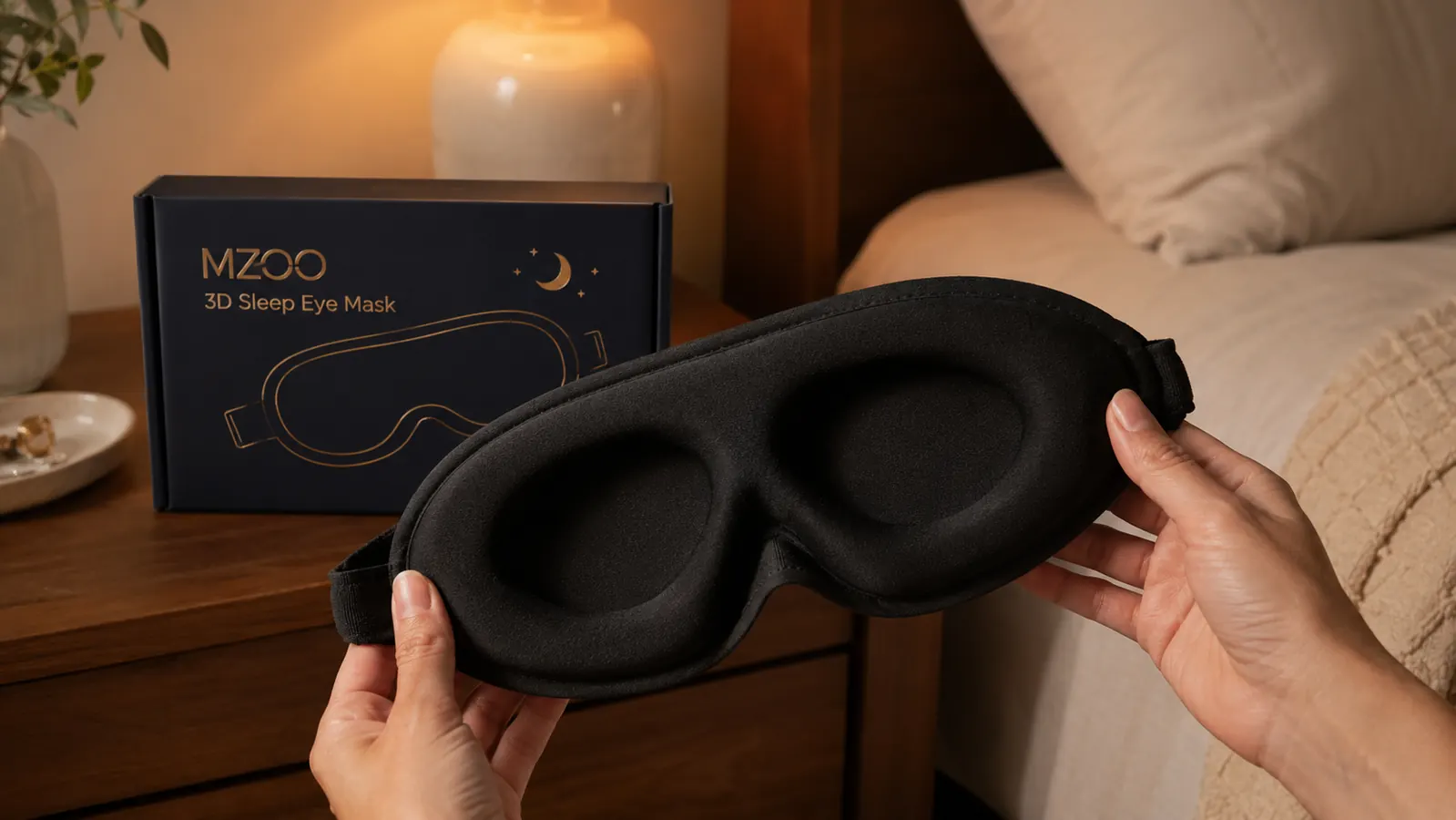
Nearly 100,000 Amazon buyers use the MZOO 3D Blackout Sleep Eye Mask. The contoured shell creates a dark chamber over your eyes without pressing on your eyelids, and the adjustable strap keeps it in place all night for side sleepers, back sleepers, and restless movers alike.
Amazon Check Today's Price on Amazon →Step 1: Walk Your Bedroom in the Dark and Find Every Light Source
The first step is an audit, and you cannot do it with the lights on. Wait until your normal bedtime, turn off every light in the room, and give your eyes two full minutes to adjust. What you see after that adjustment is exactly what your brain is processing while you try to fall asleep.
Make a mental note of every glow, sliver, and reflection you find. Common culprits: the seam of light under the bedroom door, curtain edges that do not overlap the window frame, charging cables with small indicator lights, smoke detectors with blinking LEDs, cable boxes that stay illuminated overnight, and any device with a standby display. Write them down if it helps. You are building a hit list.
This step matters because the fixes for each source are different. A curtain gap has a different solution than a router LED. Knowing which problems you have tells you exactly where to spend your time and money. Most people skip this step and go straight to buying something, which is why they end up with blackout curtains that still let light pour in at the sides.
Step 2: Block the Big Light Sources First
Windows are almost always the biggest contributors of unwanted light, especially in rooms that face a street, a parking lot, or an east-facing sunrise. Standard curtains help but rarely block light at the edges or the top gap between the rod and the wall. The fix is not always expensive. Blackout curtains hung on a ceiling-mount rod that extends a few inches past the window frame on each side close most of the gap.
For the edges, adhesive blackout strips or simple foam weatherstripping pressed along the curtain return can seal the last slivers. It is an unglamorous solution that takes fifteen minutes and works surprisingly well. If you are renting and cannot drill into the wall, tension rod systems that fit inside the window recess hold blackout fabric close enough to the glass to eliminate most light.
Once the windows are handled, work through the rest of your list. Cover active device LEDs with small pieces of black electrical tape; this costs almost nothing and eliminates the blinking distractions many sleepers never even consciously register as a problem. Move the router outside the room if the cable will reach, or tuck it inside a closed closet. Put a rolled towel or a draft stopper at the base of the bedroom door if hallway light is a regular issue. The goal after this step is a room where you cannot see your hand in front of your face.
Step 3: Use a Contoured Eye Mask to Handle What the Room Cannot
Even a well-treated bedroom has limits. If you share the room with someone who reads before bed, if you travel and cannot control the hotel room, or if morning light breaks your sleep before your alarm does, a sleep eye mask covers the gap that curtains and tape leave behind. The difference between a flat fabric mask and a 3D contoured one is significant and worth understanding before you choose.
Flat masks press directly against your eyelids. That contact is uncomfortable for most people, can smear eye makeup, and leaves gaps at the bridge of the nose where light enters. The MZOO 3D Blackout Sleep Eye Mask uses a molded shell that arches over your eyes the way a sleep blindfold should, creating a light-free chamber without touching your eyelids at all. You can blink freely inside the mask, which sounds like a small thing until you have tried wearing a flat mask for a full night and woken up with creased, irritated eyes.
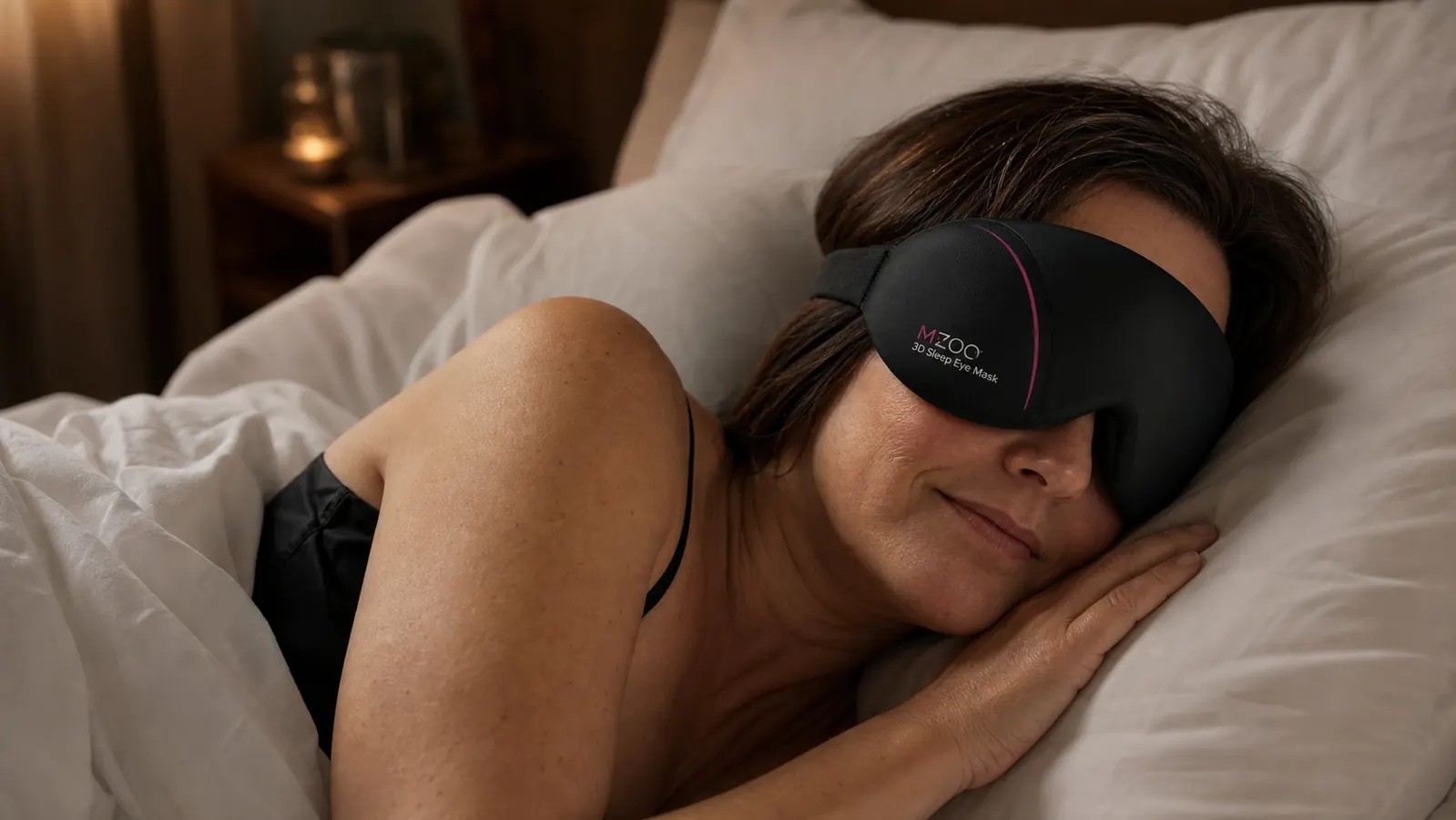
To fit the mask correctly, place the nose bridge piece first so it sits flush against the sides of your nose without gaps. The strap should wrap around the back of your head at mid-height, not up at the crown and not down at the neck. When it is positioned right, you should feel gentle, even contact around the perimeter of the mask with no pinch points and no slivers of light at the edges. If you sleep on your side, press the mask lightly against your pillow as you settle in to confirm the side-contact seal is holding.
Step 4: Dim Your Screens and Devices in the Hour Before Bed
Getting into a dark room is one side of the equation. The other side is the light you expose yourself to in the hour before you try to sleep. Screens emit short-wavelength blue light that suppresses melatonin production more effectively than most other light sources, and the closer you hold a phone to your face, the more concentrated that exposure is.
The practical fix is not to ban screens entirely but to change how you use them. Enable the warm-tone or night-mode setting on every device you use in the evening. This shifts the screen color toward amber and red wavelengths that are less disruptive to your body's wind-down chemistry. Dim the brightness as low as you can while still reading comfortably. If you use a TV before bed, sit far enough away that the screen takes up a smaller portion of your visual field.
The bedroom itself should follow the same principle. If you read before sleeping, use a warm-toned lamp rather than a cool-white overhead light. Bulbs labeled 2700K or lower give off the amber light that is least likely to push back your sleep timing. Pair this with your eye mask for the actual sleep period and you have covered both the pre-sleep and the sleep stages with the right light environment.
Step 5: Build a Consistent Wind-Down Routine That Signals Sleep to Your Brain
The physical environment sets the stage, but your brain still needs a cue that sleep is the next thing happening. A consistent wind-down routine is that cue. It does not need to be elaborate or take a long time. Even a fifteen-minute version, done in roughly the same order every night, trains your nervous system to begin the transition toward sleep before your head hits the pillow.
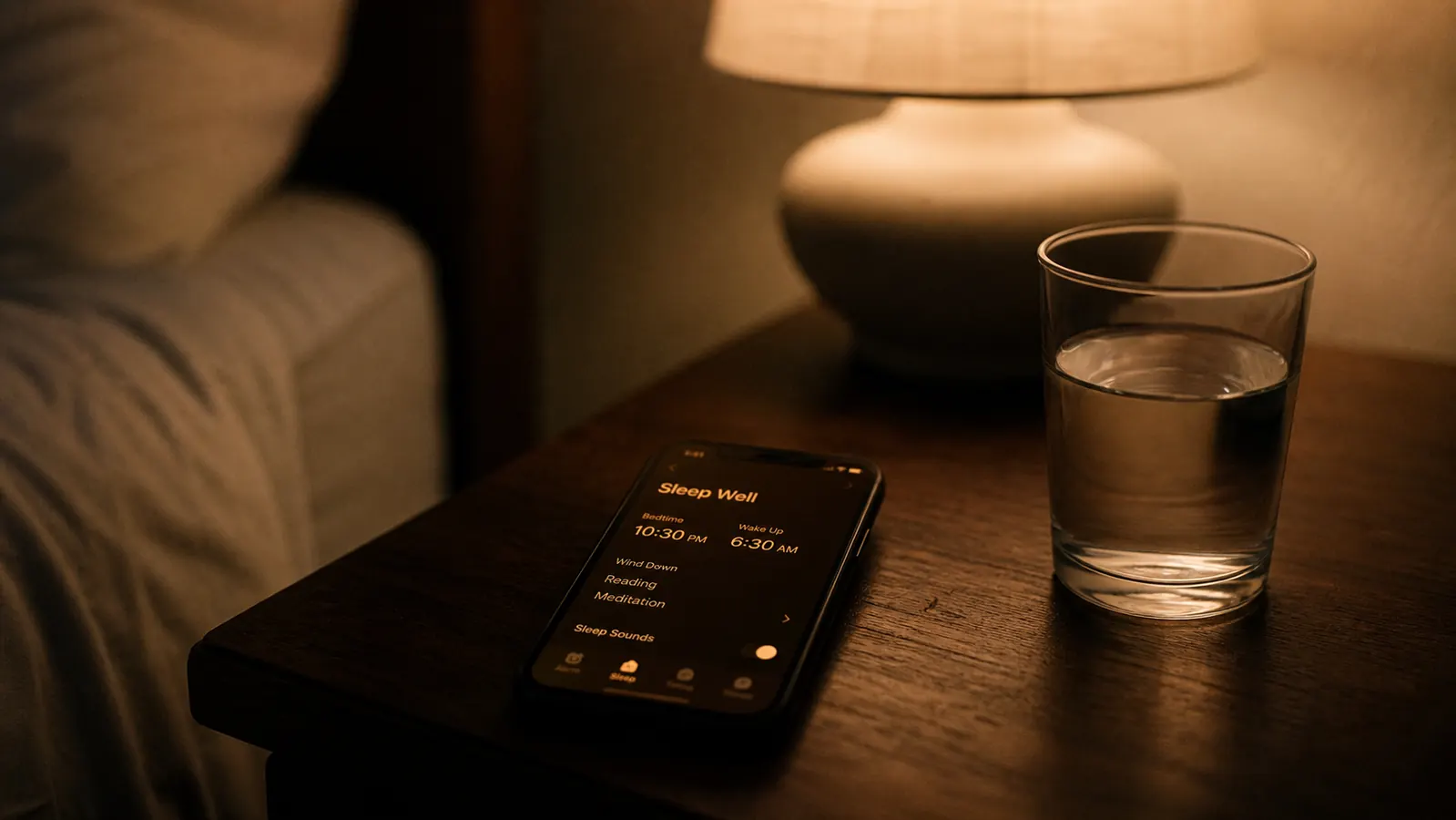
A simple sequence that works for many people: dim the lights in the bedroom around forty-five minutes before your target sleep time, set your phone to do-not-disturb and plug it in across the room rather than on the nightstand, do a brief wind-down activity like light reading or quiet stretching, then put the eye mask on as the last step before lying down. The mask becomes a physical bookmark: when it goes on, the day is over. That association builds surprisingly quickly and starts to feel automatic within a week or two.
Consistency matters more than the specific activities you choose. Going to bed at the same time, following the same short sequence, and waking at the same time even on weekends reinforces your body's internal clock. When that clock is well-calibrated, you will begin to feel drowsy right around your target bedtime rather than fighting for sleep. The darkness environment and the eye mask remove the obstacles; the routine gives your brain the signal to finally let go.
What Else Helps
Total darkness is one of the most powerful sleep environment adjustments you can make, but it works best alongside a few complementary changes. Temperature is the next most impactful variable: most adults fall asleep faster in a slightly cool room, somewhere between 65 and 68 degrees Fahrenheit, because the body needs to lower its core temperature to initiate deep sleep. Noise is the third lever. A bedroom that is dark and quiet but interrupted by sudden sounds, a partner snoring, traffic spikes, or a neighbor's television, will still fragment your sleep. A white noise machine running at a consistent low volume masks these sudden spikes so they do not pull you out of lighter sleep stages. If you are curious about that option, the full write-up in our MZOO 3D Sleep Eye Mask review covers what four months of nightly darkness felt like and whether the eye mask alone was enough, or whether the other changes in this guide were doing equal lifting. For a deeper look at why the 3D design outperforms flat masks for blocking light, see our piece on 10 reasons the 3D mask blocks light better than a regular sleep mask.
Your brain reads every photon of light as a reason to stay alert. Take that signal away and sleep comes faster, stays deeper, and ends on your schedule rather than the sun's.
Ready to put the plan into action? The MZOO mask handles the light your room cannot.
The MZOO 3D Blackout Sleep Eye Mask has nearly 100,000 reviews from people who spent years fighting light-disrupted sleep before finding a mask that actually fits and actually blocks. The 3D contoured shell sits off your eyelids, the adjustable strap works for side sleepers, and the soft foam seals out light at the nose bridge where flat masks fail. It is a simple, low-cost last step in any serious darkness setup.
Amazon Check Today's Price on Amazon →