
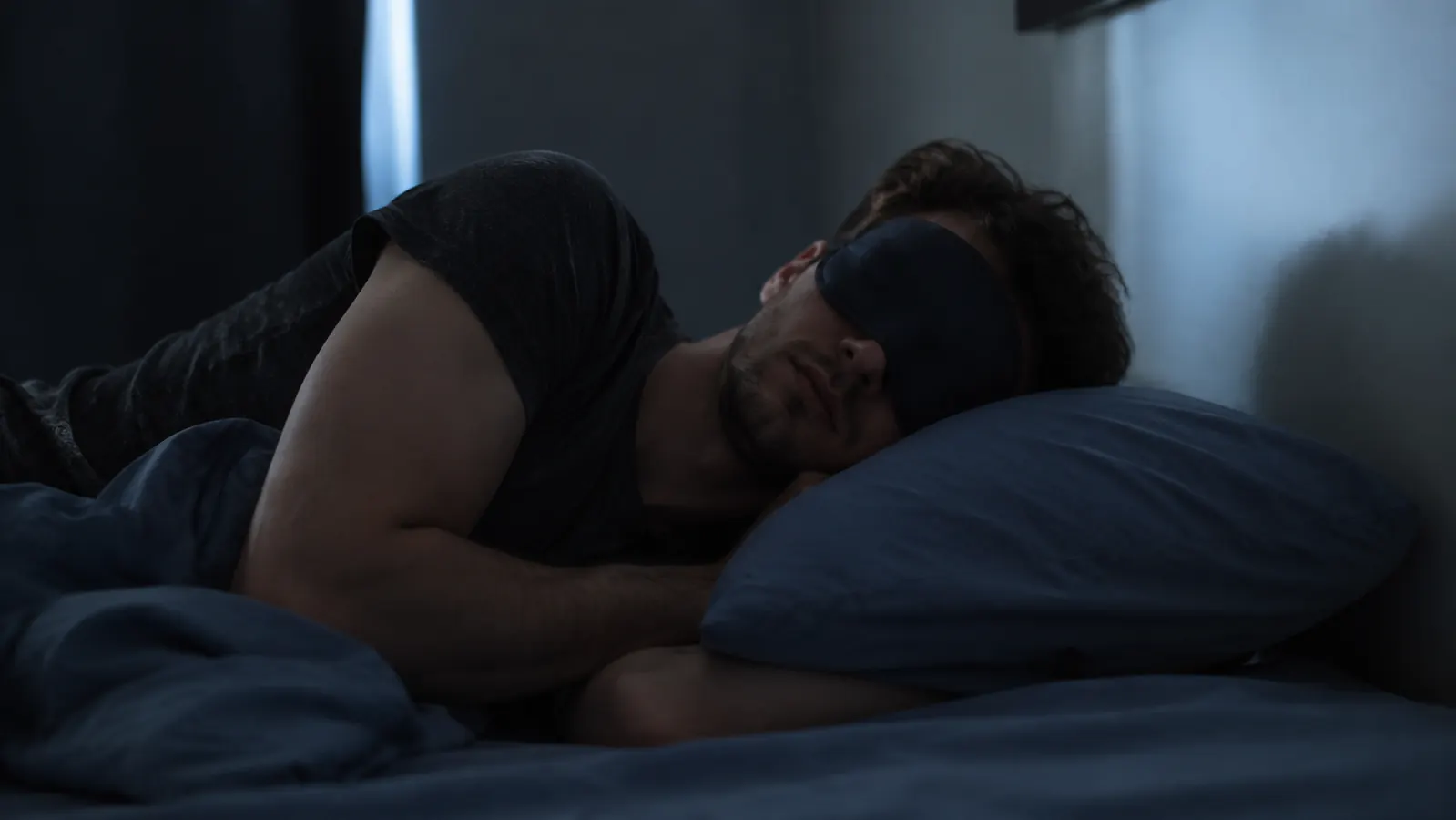
I have been wearing the MZOO sleep eye mask, a 3D contoured blackout mask, every single night for the past four months, and the most honest thing I can tell you is that I stopped noticing it after about week two. That is not a criticism. That is the point. When a sleep mask is truly doing its job, it disappears from your awareness so completely that you forget you are wearing it until you reach up to take it off in the morning.
I am a light-sensitive sleeper. Street lamps. The bathroom nightlight my partner refuses to turn off. The little blue glow from the smoke detector. All of it used to pull me out of whatever shallow drift I had managed. I tried a cheap flat fabric mask from a travel kit and another one that came in a gift set. Both pressed on my eyelids, which meant I could feel every blink, which meant I was aware I was trying to sleep, which is the fastest way to guarantee you will not sleep. The MZOO is built differently, and four months in I can explain exactly why that difference matters and where it still has limits.
Quick Verdict
The 3D contour is real and it changes everything for light-sensitive sleepers. Nearly total blackout, zero eye pressure, and comfortable enough to forget you are wearing it. The strap runs tight for larger heads and there is a brief break-in smell. Side sleepers may feel mild foam pressure at the nose bridge until they dial in the fit.
Amazon Check Today's Price →Still losing sleep to light you cannot control? This is what I use every night.
The MZOO 3D blackout mask has nearly 100,000 reviews on Amazon. Four months of nightly use later, I understand why.
Amazon Check Today's Price on Amazon →How I Have Used It
My bedroom faces a parking lot. Even with blackout curtains, there is a strip of orange light that cuts through the center gap and lands directly on my pillow. I started using the MZOO in mid-February, wearing it every night through the end of May. My sleeping schedule runs about 10:30 p.m. to 6:15 a.m. I am a combination sleeper, starting on my back and rolling to my right side somewhere in the first hour. I log my sleep with a simple notebook on the bedside table, noting how long I estimated it took to fall asleep and whether I remembered waking in the night. Not scientific, but directional.
I also wore the mask on two cross-country flights during this period and on three hotel stays where the curtains did exactly nothing useful. One of those hotels had a street sign directly outside the window that lit the room like a dim stage. The mask handled all of it.
Week one involved some adjustment. The strap felt a little tight the first few nights and the foam had a faint chemical smell that I noticed before putting it on but could not detect once it was on and I was lying down. By the end of week two the smell was gone and I had stopped noticing the mask as a physical object. That is the benchmark I use for sleep gear: the moment you stop feeling it is the moment it stops being an obstacle.
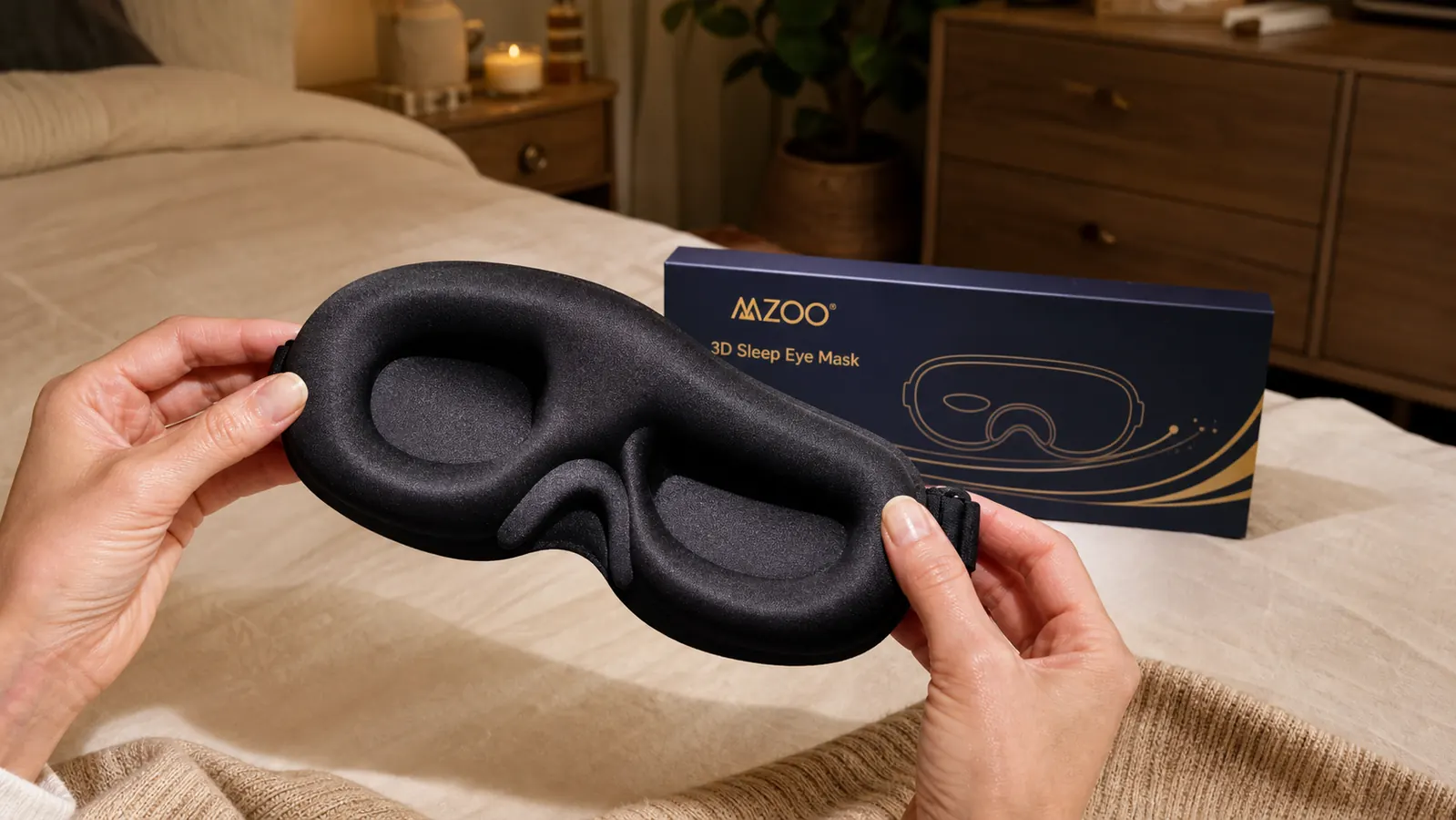
The 3D Contour Is the Whole Story
Flat sleep masks press directly onto your eyelids. You feel the fabric with every blink. If you have ever tried to read before putting a flat mask on and then found yourself acutely aware of blinking once you put it on, that is exactly what I mean. The MZOO uses a rigid molded shell with two dome-shaped cavities, one for each eye, that hold the mask surface completely clear of your lids. Your eyes sit in open air. You can blink freely. You can even open your eyes under the mask without touching fabric.
This sounds like a small thing until you have been woken up by your own eyelash brushing fabric at 3 a.m. The dome design eliminates that entirely. It also means you can wear the mask through a full REM cycle without the subtle discomfort that makes flat masks feel like something to tolerate rather than something to rely on.
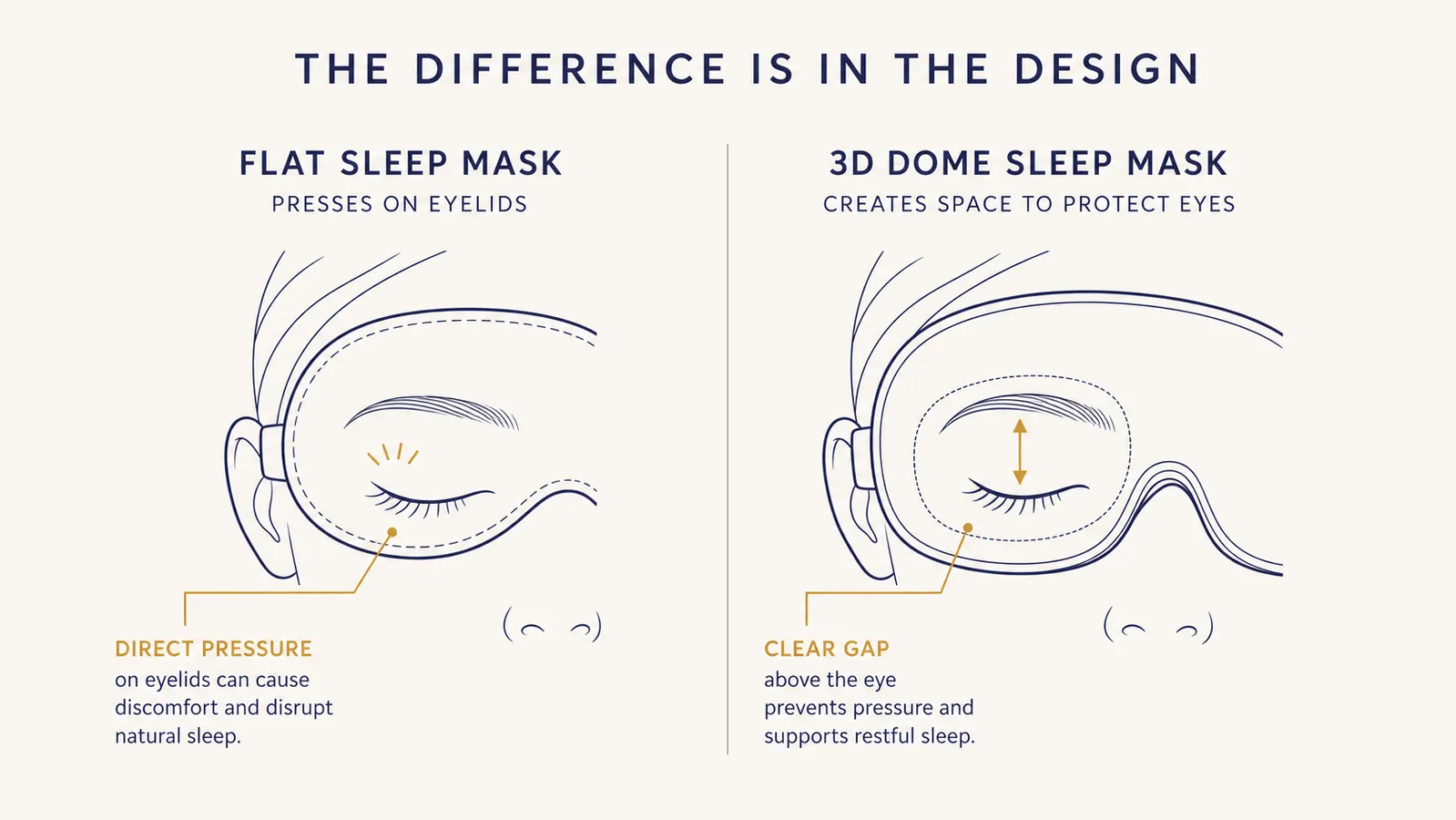
If you want to go deeper on how 3D masks compare to flat ones and which situations favor each design, I covered that in a separate piece on how 3D masks compare to flat ones. The short version: dome wins on comfort and eye pressure, flat wins only on packability.
Blackout Performance: Nearly Total, Not Absolute
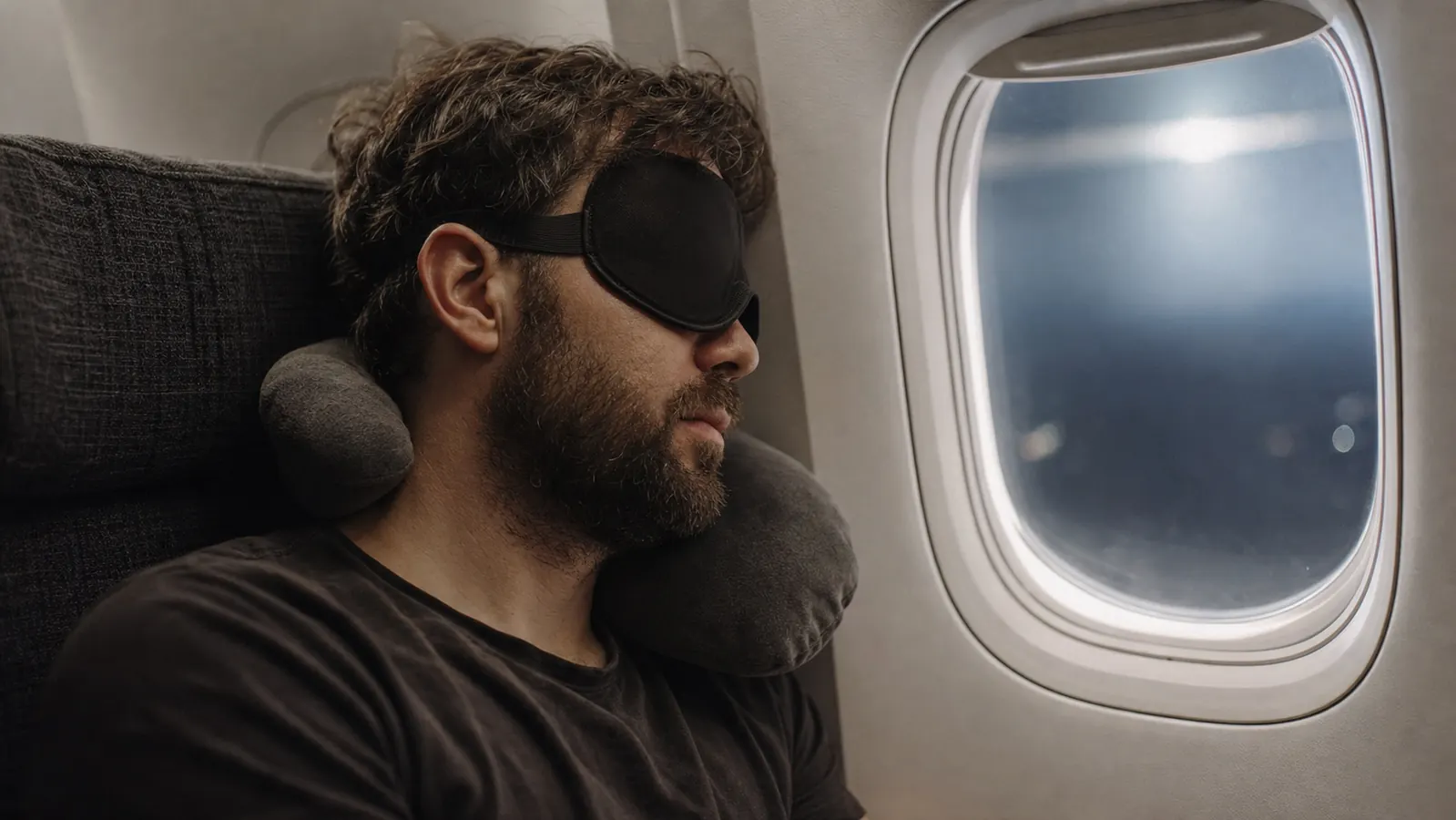
The product is marketed as a blackout mask and it earns that description under most real-world conditions. In my parking-lot-lit bedroom, lying on my back, the mask blocks everything. I cannot detect the strip of light from the curtain gap. I cannot see the smoke detector glow. On the flights, it handled the cabin's overhead reading lights and the thin strip of light from the window shade without any issue.
The caveat is the nose bridge. The mask uses a soft memory-foam nose pad that conforms to your face. It seals well for most face shapes but it is not a silicone seal. If you have a very narrow nose bridge or if you roll to your side in a way that shifts the mask, you can get a thin slip of light at the bottom of the nose notch. I noticed this occasionally when I rolled to my right side and the mask shifted slightly. It did not wake me up but it was visible if I was already awake and looking for it.
By the end of week two the smell was gone and I had stopped noticing the mask as a physical object. That is the benchmark I use for sleep gear: the moment you stop feeling it is the moment it stops being an obstacle.
Side Sleeper Notes
The MZOO markets itself toward side sleepers and the design is clearly intended to accommodate them. The ear notches are deep enough that the strap does not dig into the ear when your head is on the pillow. The nose pad compresses under mild lateral pressure without feeling sharp.
That said, the foam frame of the dome does rest against your nose bridge and cheeks. On my right side, the pressure is mild and fades within a few minutes of lying still. A small number of reviewers with high cheekbones or sensitive skin mention that the foam edge leaves a faint mark. I noticed this exactly once, after a night where I apparently slept harder on my right side than usual. It faded in about ten minutes. If your face runs sensitive, know this is a possibility, though it was not a recurring experience for me.
The Strap and Fit
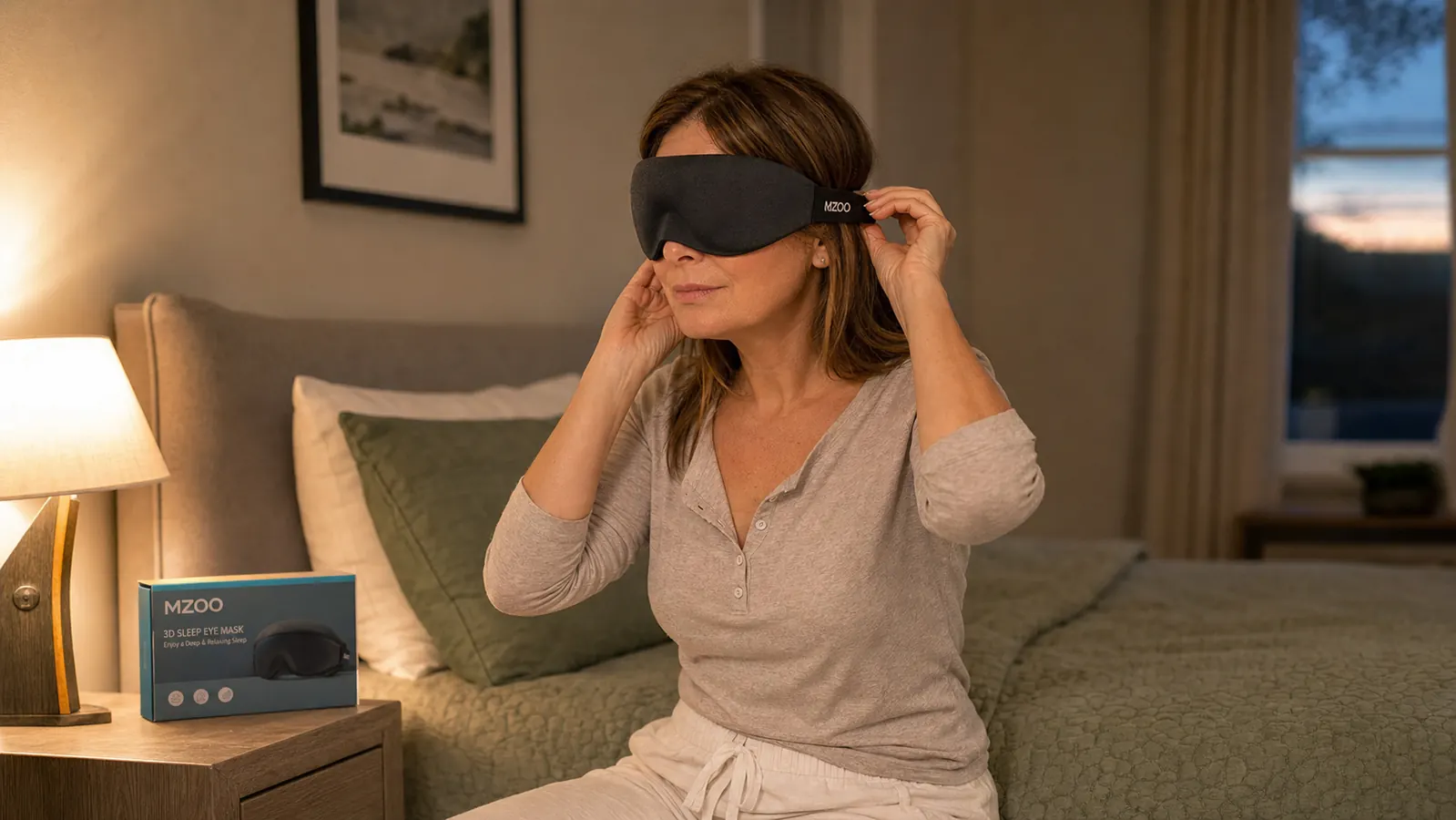
The strap is single-band elastic with a velcro adjuster at the back. Out of the box it runs on the tighter side. My head measures about 22.5 inches in circumference, which is average, and the default setting felt slightly snug the first two nights. I let it out a half inch on the velcro adjuster and it settled into a comfortable grip, secure enough to stay put when I roll over but not so tight that I feel it.
If you have a larger head, above 23 inches, or if you run warm and find elastic pressure uncomfortable at the temples, the strap is the part of this mask most likely to cause friction. The adjustment range is reasonable but not infinite. A small number of reviewers have noted the velcro loses its grip after six or more months of daily use, which I have not yet experienced at four months. Worth knowing if longevity is a priority.
For reference, the MZOO includes a small bag that doubles as a storage pouch. It is good for travel and for keeping the mask clean between uses. The foam picks up lint and skin oils over time. I wash mine by hand with mild soap roughly once a month and let it air dry, which has kept it in clean condition without any degradation to the foam or the shell.
What the First Week Actually Feels Like
The new-mask smell is real and worth mentioning plainly. It is a mild foam off-gassing scent, similar to what you notice when you open a new mattress topper. It is not strong and it dissipates within a week of regular use and airing out. I did not find it disruptive once the mask was on and I was lying down, but if you are particularly sensitive to scents, give the mask a few nights on the nightstand, out of the bag, before you wear it. This resolved completely for me and I never thought about it again after week one.
There is also a learning curve with the nose pad. The first couple of nights I either had the mask sitting too high, which pulled the nose pad away from my face and let light in at the bottom, or too low, which put the dome too close to my cheekbones. Finding the right vertical position takes two or three nights but then becomes automatic. I now put the mask on in the dark without thinking about placement.
Pros
- 3D dome cavities hold the mask completely clear of your eyelids, zero pressure during blinking or REM movement
- Near-total blackout in real-world bedroom conditions, including street-light-heavy rooms and airplane cabins
- Memory-foam nose pad conforms well to most face shapes for a good seal at the bridge
- Deep ear notches accommodate side sleeping without strap pressure on the ear
- Lightweight and packable enough for regular travel use
- Velcro strap is adjustable and stays put through rolling and position changes
- Nearly 100,000 Amazon reviews with a 4.6-star average, which suggests most people arrive at the same conclusion
Cons
- New-foam smell requires about a week of off-gassing before it disappears
- Strap runs tight out of the box, needs adjustment, and may still feel snug on larger heads
- Nose bridge can admit a thin slip of light when you roll to your side and the mask shifts slightly
- Foam frame edge can leave a mild cheek or nose-bridge mark for sensitive skin or heavy side sleepers
- Velcro adjuster may lose holding strength after six or more months of daily use per some long-term reviews
- Learning curve of two to three nights to find the right vertical position on your face
Who This Is For
This mask is the right choice if you are a light-sensitive sleeper in a room you cannot fully control. Shift workers sleeping during daylight hours, people in apartments where streetlights or hallway light leak under the door, travelers who cannot predict what the hotel curtains will actually do, and anyone whose partner uses a device or reading lamp after they are trying to sleep. The 3D contour makes it comfortable enough to forget about, and that is what makes it usable long-term rather than something you wear twice and abandon.
It also works well for people who have tried flat masks and found the eyelid pressure distracting. If that description fits you, the dome design addresses the exact problem you experienced. The 10-minute adjustment period to find your fit is a real thing, but it ends. Most people report not thinking about the mask at all after the first week, which lines up with my own experience.
If you are curious about all the specific ways the 3D shape outperforms flat fabric masks for blocking light, I laid out 10 reasons a 3D sleep mask blocks light better in a separate article that gets into the geometry and fit mechanics in more detail.
Who Should Skip It
If you have a very large head circumference, above 23 to 24 inches, or if you find elastic bands at the temples genuinely uncomfortable rather than just mildly noticeable, this mask may frustrate you before it helps you. The strap is adjustable but not infinitely so, and some people with bigger or differently-shaped heads find the frame does not sit flush at the nose bridge regardless of strap tension.
If you need a completely scent-free sleep environment from night one, know that the first week involves a mild off-gassing smell that some sensitive noses will notice. It resolves, but it takes a few days. And if you are a strict stomach sleeper who presses your full face into the pillow, the dome frame will feel awkward and the seal at the nose bridge will break. The mask is designed for back and side sleepers.
Four months in, this is still the mask on my nightstand every night.
The MZOO 3D sleep eye mask remains my go-to recommendation for light-sensitive sleepers. Check the current price on Amazon and see if it is right for your situation.
Amazon Check Today's Price on Amazon →