

If you have ever reached for a sunrise alarm clock like the REACHER and wondered whether it could actually change the way your mornings feel, the answer is yes, but only if you pair it with a few habits that set it up to work properly. Most people wake up groggy not because they lack willpower but because their body is being pulled out of deep sleep by a jarring buzzer at the worst possible moment in their sleep cycle. The alarm wins the battle every morning and your body loses.
Grogginess after waking is not a character flaw and it is not something you simply push through with more caffeine. It is a signal that your body did not have a gentle enough transition from sleep to waking. The good news is that transition is completely within your control once you understand what is causing it. This guide walks you through five practical steps that, taken together, make mornings noticeably easier to face.
Still dragging every morning? This is the alarm clock that changes the first ten minutes of your day.
The REACHER Sunrise Alarm Clock builds light gradually over 30 minutes so your body starts waking before the sound ever kicks in. Rated 4.4 stars from over 3,400 buyers. No app required.
Amazon Check Today's Price on Amazon →Step 1: Anchor Your Wake Time and Hold It on Weekends
The single most powerful thing you can do for easier mornings costs nothing and requires no equipment. Pick a wake time and keep it every single day, including Saturday and Sunday. Your body runs on an internal clock called the circadian rhythm. When that clock is consistent, it starts preparing your body for waking about 90 minutes before your alarm is due to go off, raising your body temperature slightly and shifting you into lighter sleep stages. When you sleep in on weekends you reset that clock and spend Monday morning feeling like you have jet lag.
The consistency does not have to be perfect to the minute. A 30-minute window is fine. But the closer you can keep it, the more your body will cooperate with you at wake time. Think of it less as discipline and more as giving your body a reliable schedule it can predict and prepare for. Most people who say they are not morning people have simply never given their internal clock a stable anchor point to work from.
If your current wake time feels brutal, try pushing it back by 15 minutes every few days rather than making a sudden jump. Gradual shifts are much easier for your body to absorb. Once your anchor time is locked in, everything else in this guide will work better because your sleep stages will be more predictable at the moment you need to wake.
Step 2: Replace Your Buzzer Alarm with a Sunrise Alarm Clock
A standard alarm, whether it is a phone buzzer or a classic beeping clock, forces your body awake with a sudden spike of cortisol. That is not a good morning hormone spike. It is a stress response. Your heart rate jumps, your breathing quickens, and your brain scrambles to orient itself. Even if you fall back asleep quickly after hitting snooze, that cortisol spike has already disrupted your body's natural waking process. You spend the next 20 minutes trying to recover from your own alarm.
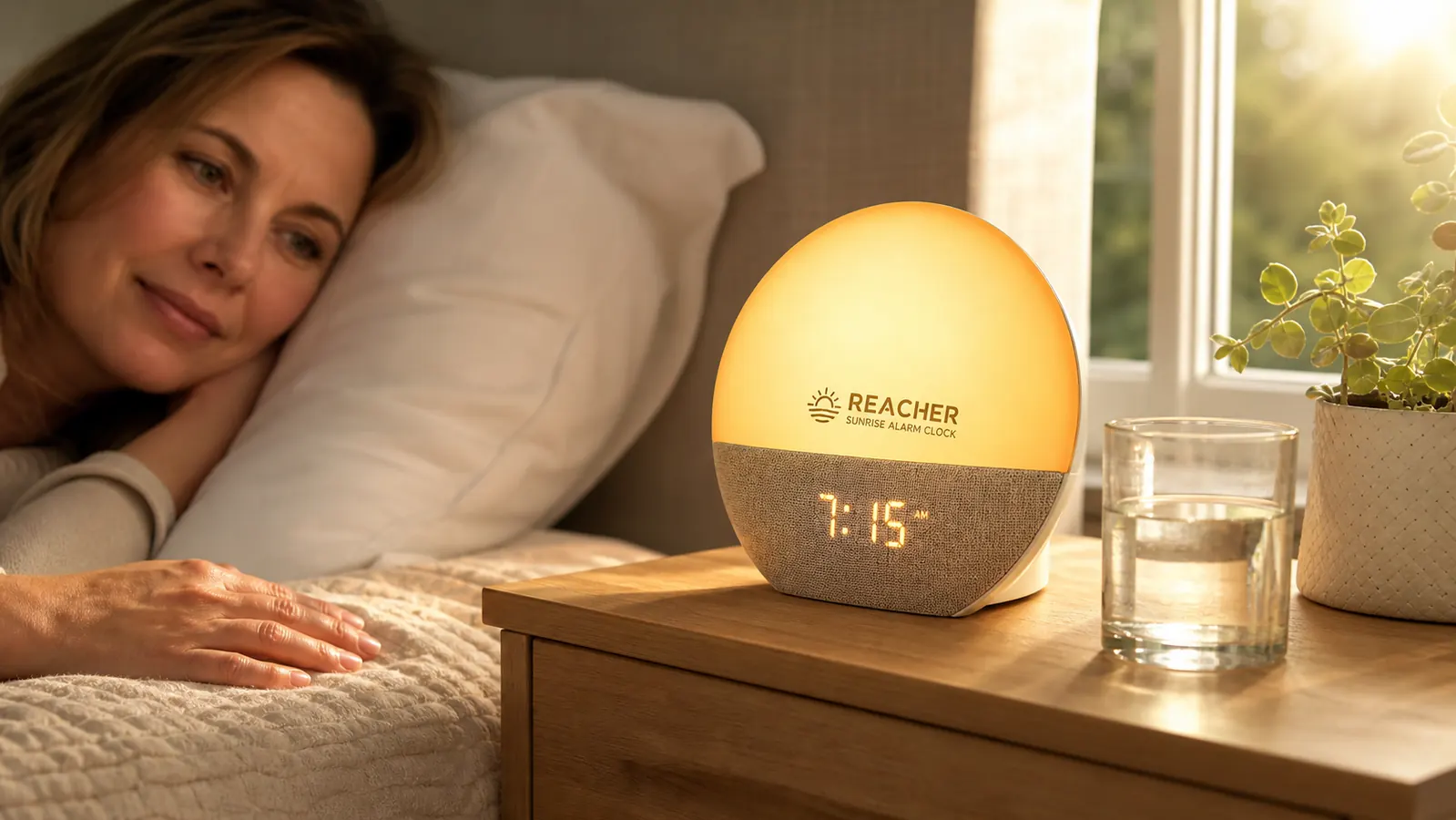
A sunrise alarm clock works the opposite way. The REACHER starts brightening about 30 minutes before your set wake time, moving from a faint warm glow through progressively brighter light that mimics a natural sunrise. Light is your body's primary signal for waking. When it comes on gradually, your body reads it the same way it reads actual morning sun filtering through a window. You begin to surface from sleep on your own, ahead of any sound alarm.
By the time the REACHER's sound alarm activates, most people are already in a light stage of sleep or are simply lying there already awake without that groggy, dragged-under feeling. The difference in the first five minutes of your morning is significant. Instead of jolting upright with your heart pounding, you open your eyes to warm light and realize you are already awake. If you want a deeper look at what two months of using this clock felt like day to day, the REACHER sunrise alarm clock review covers that in full.
Step 3: Get Real Light on Your Face Within Ten Minutes of Waking
Your sunrise alarm clock does an excellent job of starting the waking process but it is working at a lower lux level than outdoor daylight. Once you are up, natural light is the most powerful tool you have for shaking off the last traces of morning grogginess. On a clear morning, even standing outside on your porch or near a window with direct sunlight for five to ten minutes tells your brain, in no uncertain terms, that the day has started.
This is not about sunshine being pleasant, though it is. It is about a direct signal to the part of your brain that controls your circadian clock. Bright light in the morning suppresses melatonin, the sleep hormone, and tells your body clock that the anchor point for the day has been set. People who get morning light consistently tend to feel sleepier earlier in the evening, which means they fall asleep faster and get more total sleep. Better sleep at night makes every morning easier.
On cloudy days or during winter when you have to be up before sunrise, a bright overhead light in your kitchen while you make coffee accomplishes something similar, just not as powerfully as outdoor light. Keep a window shade pulled back during your morning routine and let whatever daylight exists come in. Even diffuse cloud light is many times brighter than indoor lighting.

Step 4: Break the Snooze Spiral for Good
Hitting snooze feels like rest but it is actually one of the main reasons people wake up feeling worse than they would have if they had just gotten up on the first alarm. Here is what happens inside those nine extra minutes. Your body, believing sleep is resuming, begins sliding back toward a deeper sleep stage. When the alarm fires again, you are being pulled out of the beginning of a new sleep cycle rather than the tail end of one. The technical term for this is fragmented sleep and it reliably increases grogginess.
The sunrise alarm clock removes most of the temptation to snooze because you are not being startled awake in the first place. When the waking process is gradual, the jarring shock that makes you want to retreat back under the covers is mostly gone. Still, it helps to make a deliberate decision the night before: set one alarm time and commit to it. Moving your phone or alarm to the other side of the room is a classic trick that still works. If you have to physically get up to turn it off, the battle is mostly won.
Snooze does not give you more rest. It gives you the beginning of a sleep cycle you will be interrupted in nine minutes later. That is the opposite of restful.
Another approach that helps is having something small to look forward to in the first ten minutes of being awake. A cup of good coffee, a podcast you enjoy, a few minutes outside. The anticipation of something pleasant makes the moment of actually getting up feel less punishing. Pair that with a sunrise alarm that does not shock you awake and most people find the snooze habit dissolves on its own within a couple of weeks.
Step 5: Build a Wind-Down Routine So You Are Not Sleep-Deprived at Wake Time
Every strategy in this guide will underperform if you are simply not getting enough sleep in the first place. No sunrise alarm clock, no matter how good it is, can fully counteract the grogginess that comes from being chronically short on sleep. The REACHER can make waking easier, but if you are going to bed at midnight and waking at 6am when your body needs seven to eight hours, you will still feel the drag. The fix has to happen on the other end of the night.
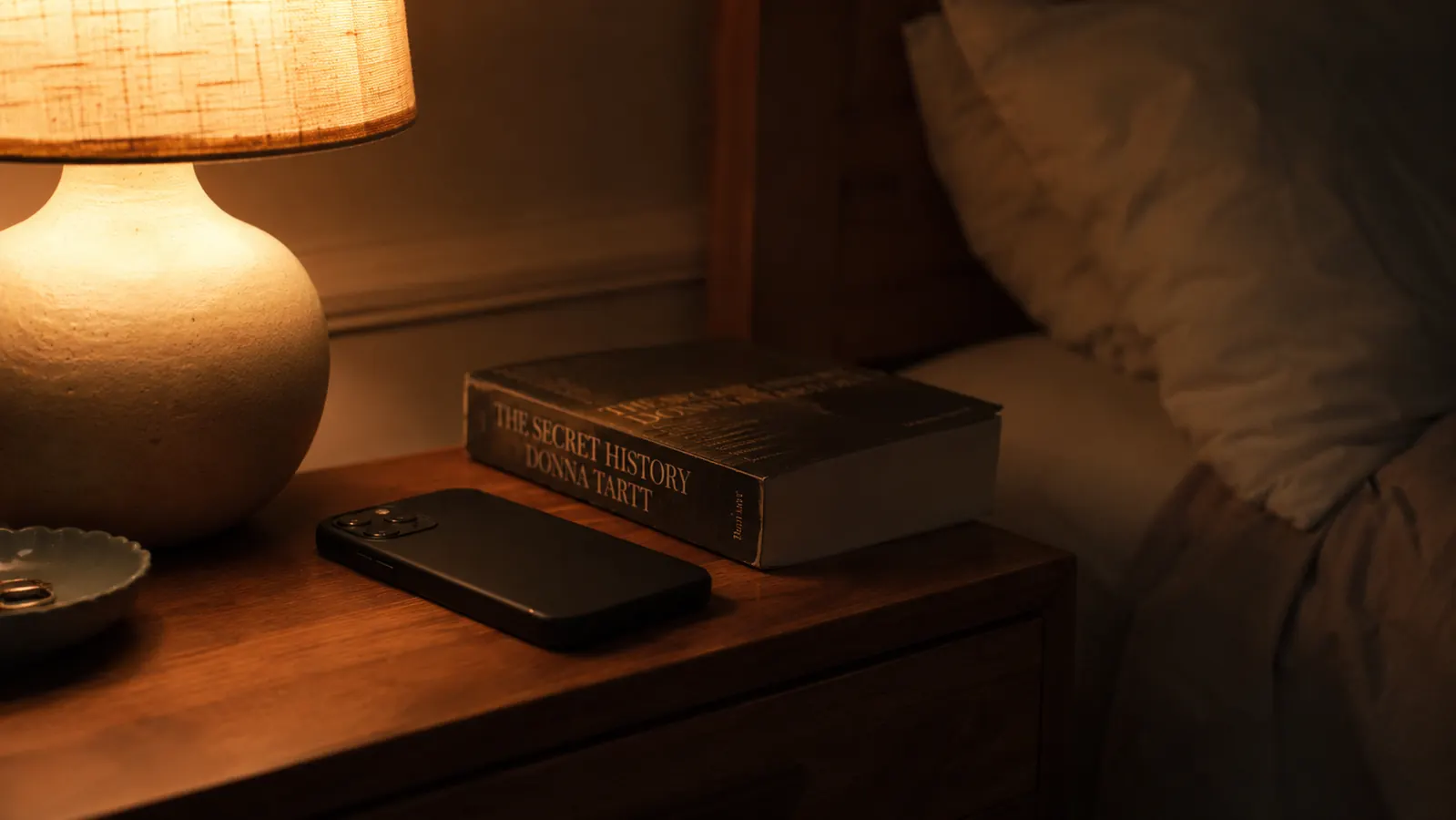
A wind-down routine is the evening equivalent of the morning anchor time. Pick a consistent time to start unwinding, ideally 60 to 90 minutes before you want to be asleep. During that window, dim the lights in your home, put your phone face-down or in another room, and shift to low-stimulation activities. Reading a physical book, taking a warm shower, or even just sitting quietly with a decaffeinated tea all work. The goal is to signal to your nervous system that the day is winding down and sleep is coming.
Bright screens in the hour before bed, particularly phones and tablets held close to your face, suppress melatonin and push back the time your body is ready to fall asleep. You can compensate somewhat with blue-light glasses or screen warm-tone settings, but the simplest fix is to put the screen down. The REACHER on your nightstand is already handling the morning side. A consistent wind-down handles the evening side. Both together create the full loop that makes sleep genuinely restorative.
What Else Helps
The five steps above address the core drivers of morning grogginess: inconsistent timing, harsh wake stimuli, too little light exposure, fragmented sleep from snooze, and not enough total sleep. But a few supporting habits are worth mentioning. Keeping your bedroom cool at night, between 65 and 68 degrees Fahrenheit for most adults, helps your body hit deeper sleep stages more easily. Skipping alcohol within three hours of bed, even moderate amounts, significantly improves sleep quality because alcohol disrupts the second half of your night when your body does most of its restorative work. And if noise is a factor, a white noise machine running through the night masks the kind of sudden sounds that pull you into lighter sleep stages in the early morning hours. For readers who want more detail on the sunrise alarm itself, the 10 reasons a sunrise alarm clock makes mornings easier piece covers the mechanics from a different angle.
Ready to stop fighting your alarm every morning? The REACHER makes the switch easy.
The REACHER Sunrise Alarm Clock simulates a natural sunrise with 26 nature-inspired sounds and a gradual warm-to-bright light sequence. Simple controls, no subscription, no app. Over 3,400 buyers rated it 4.4 stars.
Amazon Check Today's Price on Amazon →